
Monday, March 12, 2007
Lewis Center
I just took a survey here, it looks like a good site so I'm going to save it here for later. You can look at it too.


Sunday, March 04, 2007
The Ego has Landed
 There aren't so many things as humbling as busting your ass in front of a bunch of teenagers.
This happened to me today: I was shooting hoops out behind the church and one of the balls flew over the chained link fence. When playing with Wesley the week before, I had simply lept the fence instead of walking all the way around. So, of course I think nothing about going for it again. Except this time, I didn't raise my feet high enough, and one of my shoes caught the top of the fence--which caused my upper torso to go flying toward the ground where my feet were supposed to be. I hit with a thud and a "uuugh" (which was the wind going out from my lungs) It didn't hurt, but still, it looked really stupid. I noticed one of the girls looking at another teenager like they really wanted to laugh, but didn't know if it was okay. So I started laughing, and then we all had a good laugh. I made a joke about "my ups" the next time I went up for a shot, and that got a few laughs too. Now the only thing is, my wrist really hurts.
The whole scenario got me thinking of embarassment. It has been a while since I've been embarassed. On the other hand, I don't really feel that embarassed. I more feel sorry for them because now they're probably going to think of me flopping over the fence when they see me, and that must be a hard thing to square with someone you should respect and admire. (I am their pastor, after all). In other words, I'll get over it and probably not remember it in a month or two, but can they ever again relate to me as a pastor without cringing in that embarassed for me, "wanting to laugh but not sure I should" memory?
Perhaps the ego hasn't landed quite yet in my case--They probably don't occupy much of their time or mental energy thinking about me anyway, I suppose. Of course, I do kind of get up and speak for 15 minutes in front of them every week. Of course, they are usually more concerned wiht their text messages than me anyway. Hmmmmm....Does this make sense? I took a pain pill because of my wrist!
Happy trails!
Wednesday, February 28, 2007
Devil in Disguise
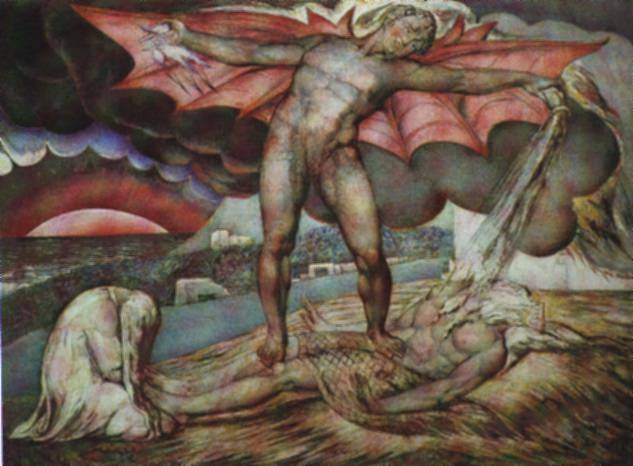
I decided not to go in this direction for my sermon, but it was a good page or so of information. If it sparks anything or fires the ole imagination, cheers!
We probably have diverse viewpoints about this figure in our faith tradition. Many of us probably don’t believe that evil has some personification, that perhaps Satan is some psychological projection of the evil inside us. Some of us no doubt believe in a real and tangible Devil who is actively trying to upend God’s designs for the universe. Perhaps you don’t believe in the Devil or even evil as a reality at all, but instead simply consequences for not aligning our will with God’s will.
I’m not sure there are any requirements for orthodoxy on the Devil. We don’t focus our beliefs in that direction. In some ways it really doesn’t matter. We pray to be led not into temptation, but delivered from Evil, but we don’t define what that Evil is like. Satan is a number of things in the Bible—and much of our scriptures were written in a time when the Jewish imagination had not yet conceived of “The Devil.”
But the Devil makes an appearance there in our scripture today. We hear about him and what the early Christian mind thought was his authority. In several places in the New Testament, the Devil, some spirit trapped between heaven and Earth, has jurisdiction over much of the world as we know it. Satan tempts Jesus with the power to rule over the entire earth in a political fashion, much like the people of Israel were expecting the Messiah to do. The Devil takes Jesus up on a high mountain and says to him, “I will give you all their authority and power, for it has been given to me, and I can give it to anyone I wish. So if you worship me, it will all be yours." Elsewhere, in 1 John 5:19, we hear “We know that we are children of God, and that the whole world is under the control of Satan.”
This must have been pretty apparent to the early Christian church people, who were hunted down by the authorities and tossed to the lions. It wasn’t hard for them to imagine who was behind it all, pulling the strings—it must’ve been the Adversary. The rulers of the nations seemed to be in collusion with the Evil forces of the Universe. They were to be feared and opposed as diligently as the Devil himself. Paul writes to the Ephesians, “For our struggle is not against flesh and blood, but against the rulers, against the authorities, against the powers of this dark world…”
I mention these things today because I believe it is important for us to examine our evolving relationship with Evil. The early church drew the battle lines—it was the Kingdom of Heaven against the Kingdoms of Earth. Have we evolved as a society? Have the Evil forces behind the governments of the world simply evaporated, moved into easier to identify realms? If one judged by the focus of the televangelists and Christian radio wonks, it would seem that Christians believed nowadays that Satan had changed address to Hollywood or the Halls of Science and Jesus himself had taken up residence in Washington!
Monday, February 26, 2007
I'm a geography geek, okay?

This is a version of the world map proportional to wealth. Cha-Ch-Ch-Ch-Ch-eck it and more by clicking on the map.
Who will save your soul?
In a previous ministry setting, I heard that a minister who had served in my position had organized a mission trip to Mexico. On this particular mission trip, a house was constructed and participants took part in a Vacation Bible School. Also included in this mission trip was a nightly contest where the participants from the church where I now served would gather together and tally how many “souls they had saved” that day. A prize was given each night to the person who reported the highest number of “souls saved” by inviting the Mexicans to “accept Jesus Christ as their Lord and Savior.” I must confess that hearing this story made me want to run to the bathroom and throw up.
This kind of contest provoked such a visceral reaction from me because I believe that it confuses God’s action with our own, and in so doing it amounts to idolatry. We are used to thinking of idolatry as bowing down to worship little figurines of Greek and Roman gods, as Paul encountered and wrote about in his ministry. However, we are in a much more subtle and deeper danger of idolatry. We are subject to a new cultural false deity—the Self. Any time we are engaged in mission, our work is to be a conduit for God’s action. It is impossible for humans to save their own soul, much less anyone else’s soul. That is instead God’s gift of grace. When we share the life changing power of the Gospel through work or word or song or prayer, the Spirit moves through us and creates the opportunity to open eyes to God’s grace. Far from being a “tally” that we can name and claim, our action on behalf of God should only be attributed to God, never to ourselves. If we confuse this issue, we risk idolatry.
This is one reason I am glad our church’s mission committee has planned a mission trip to Camp Egan this month. On March 22-24, we are going to be engaged in refurbishment and construction around the camp where so many district and conference activities take place. Participants in that mission trip mentioned above would, I suppose, need to find some other evening entertainments since there aren’t going to be any other people there at the camp to “witness to” besides ourselves—there wouldn’t be any souls to “save” and then tally in order to win a prize. But, this is probably a good thing. It allows us to learn a little bit about how we are used by God in mission.
The following weekend, Camp Egan will host the District Confirmation Retreat, when young people from all over the Muskogee District will gather to learn about God, the church, discipleship, grace, and their decision to follow Christ. The work that we will do the previous weekend will contribute to and enhance the ability for those kids to gather and learn. Who knows, a 13 year old kid may make the decision at that retreat to give their life to Christ and follow him, and our work will have contributed in some way to that kid’s experience—in short, Christ will turn our water into wine. This is no different than having an in depth conversation with someone who doesn’t know Christ and at the end of that conversation “convincing” that person that a life of faith is essential and life giving. In both examples of mission, God allows us to be conduits of His Grace.
I understand why the people on the mission trip to Mexico had such pride and sense of ownership involved in their experience of “saving souls.” It is an exciting and energizing experience to be used by God. If we refuse the temptation to put ourselves on a pedestal while involved in mission, we may see that God is saving our own soul through our work in mission as well as others.
Plastic Ocean

You can tell LA Times put a lot of work into this series on garbage in the Pacific. It is from last summer, but I was just recently reminded of the reality of the Eastern Garbage patch (floating plastic debris covering area twice the size of Texas). Give this some time:
Thursday, February 22, 2007
Lenten Funnies

Because we need a little chuckle to start off Lent....(identities obscured to protect from utter damnation)
Wednesday, February 21, 2007


Wednesday, February 14, 2007
Thursday, February 08, 2007
Pushing the Pulpit
The following post is from a blogger in CA who went to the same seminary as I did. I came across her post, and thought since I spent so much time responding to it, I should put it on my blog too.
From Endangered Species: Church
This morning I came across something in the United Methodist Newscope that caught my attention. The New York Times published an article on January 27, 2007, about how seminaries are having a tough time getting young graduates to go onto local church ministry. Apparently, students are not necessarily going to seminary to become ordained pastors. This has put the onus on seminaries to do more vocational counseling and might I say--nudging.
''We need to lead the horses to water, as it were,'' Dr. James Hudnut-Beumler, the dean of the divinity school at Vanderbilt University, said of what has become a common effort across faiths and denominations for seminaries to lean on their students -- ever so slightly -- to consider a pulpit job." (from the New York Times Article)
If students are not going to seminary to be a part of the pulpit-pastor mill, what on earth are they spending all that money doing?
This was something I had the pleasure of talking about with CST president Jerry Campbell. As we talked it became clear that many in my generation and younger are going to seminary to get the kind of faith training and exploration that used to happen in the local church. In fact, because the Church does not seem trustworthy, young people go to a place of trust (learning institutions are that for us) and spend thousands of dollars receiving high quality Christian Education.
While I do not believe that the sole purpose of seminary education is to pop out trained church leaders (that's a lofty goal!), I do think that as we examine a changing and emerging church, we need to challenge the seminary to do the same kind of examination.
Here's what I added to the discussion....
Good topic! A friend and I spent a few hours the other day wondering what it would be like if the church expanded the orders of ministry to include a "teaching" order. This could possibly be a way to keep a connection with all the young adults getting MDIVs and then pursuing more education in order to teach. The church could validate their calling and ask them to contribute in some way to the life of the church through a special "Rabbinical" order (that terminology may be confusing, so something else might be more appropriate) You get the idea. A possible "dollars and cents" impact of this idea could be more participation in the pension plan, insurance programs (that might end up killing us as the baby boomer pastors begin retiring) and who knows what else.
I was a student at CST and was encouraged to pursue my calling into a PH.D by one of the professors there, even though it was my intention to go into parish ministry (or perhaps campus ministry) This professor did have a keen awareness of my passion for teaching, but I decided that the parish probably needed ministers who felt called to teach as well. (Plus another 4-6 years of school didn't fit into my "family plan" at the time, nor will it ever, perhaps....though I'd really love to go). As it is now, I put "gasoline" in my tanks by offering frequent Bible studies, taking sermon prep and construction very seriously--and the fact that I'm appointed to a smallish parish gives me plenty of time for study. (Though I tend to end up playing with my son---hell, will I regret that on my deathbed? Yeah right!)
Basically, in a nutshell--Seminaries should be selling the idea to MDivs who are considering jumping ship into other degrees or careers that with the flooded field of college educators, they have a greater chance of teaching in the parish than in the academy anyway! And sooner! The idea that the parishioners dont' want serious and critical study opportunities is bunk. I find teaching in the church to be ultimately rewarding, even though I too felt the pull of the Ph.D instead of a pulpit.
Tuesday, February 06, 2007
The coolest would be 62 year old ever
Happy Birthday!

As we do every year, today is the celebration for our brother Bob. He was a beautiful spark of humanity--One who was enraptured with the Spirit. He was authentic. (Just watch the attached video for the soul he lent to his performances.) he was unique--none like him at the time or since. He did what he could to make the world a better place. He left great music for the world to love for centuries. I am convinced that in 200 years, the world will love him as much as the world loves Beethoven now.
As we do every year, today is the celebration for our brother Bob. He was a beautiful spark of humanity--One who was enraptured with the Spirit. He was authentic. (Just watch the attached video for the soul he lent to his performances.) he was unique--none like him at the time or since. He did what he could to make the world a better place. He left great music for the world to love for centuries. I am convinced that in 200 years, the world will love him as much as the world loves Beethoven now.
Thursday, January 25, 2007
Under a Spell
I've been recording Six Feet Under on my DVR lately. After a few years of friends suggesting that "you'd really love this show," I finally have the impetus to watch--and boy am I glad. Tonight I just finished watching what I think is the first episode of season 3, where Nate has multiple visions of possible lives while under aneaesthesia. I thought his (what I assume is the first) vision, being married to what's her name--Lisa? Enamored with fatherhood, was beautiful and reminicent of life on this homefront. There were also plenty of quirky little Los Angeles things that I thought were fun, like Lisa's annoyingly self-absorbed boss "in the business." I would just say, I think every person in the ministry should watch this metaphysical comedy drama mystical treatise on life and death and the hereafter. Good schtufff.
On the subject, I rode with the local funeral home director on a 20 minute drive out to the country cemetary where we buried Jerry today. As we pulled in to the cemetary, after a long conversation about the culture of grief in Oklahoma (which perhaps I'll blog on another day) I finally worked up the nerve to ask him if he was a six feet under fan. He laughed and said he loved it, and that he got that question from families all the time. His kids bought him the collectors edition for Christmas, and he would stay up late at night and plop in a DVD after his wife went to bed. we laughed b/c we both have the same watching pattern (his wife doesn't appreciate some of the more "left coast" morality of the program, mine just doesn't have the time to get hooked into another t.v. program--although she's watched a couple, and I can tell she's weakening in that conviction. He offered to let me borrow his box set, because he's on season 5, and I think I've missed several episodes of 1 and 2. How cool is that--borrowing 6 feet under from the local funeral home director? Ha! That's small town for you!
On the subject, I rode with the local funeral home director on a 20 minute drive out to the country cemetary where we buried Jerry today. As we pulled in to the cemetary, after a long conversation about the culture of grief in Oklahoma (which perhaps I'll blog on another day) I finally worked up the nerve to ask him if he was a six feet under fan. He laughed and said he loved it, and that he got that question from families all the time. His kids bought him the collectors edition for Christmas, and he would stay up late at night and plop in a DVD after his wife went to bed. we laughed b/c we both have the same watching pattern (his wife doesn't appreciate some of the more "left coast" morality of the program, mine just doesn't have the time to get hooked into another t.v. program--although she's watched a couple, and I can tell she's weakening in that conviction. He offered to let me borrow his box set, because he's on season 5, and I think I've missed several episodes of 1 and 2. How cool is that--borrowing 6 feet under from the local funeral home director? Ha! That's small town for you!
Monday, January 22, 2007
Death on the Doorstep
Helping people experience death is one thing I didn't feel prepared for going in to the ministry (largely because apart from a friend's suicide when I was 17, I had not experienced much death). However, after two years of ministry, I don't know that any amount of "experience" with the dying and survivors prepares a minister to be what he or she needs to be in the face of death. Only the action of the Holy Spirit makes us "qualified" to help anchor people in times of crisis. I have learned more about grieving and the typical processes of encountering death through seminary and other programs since, but these last two weeks have been unusual.
First, I received a call from a church member a week ago last Friday that alerted me to the death of a young woman that I knew from around town who had found her husband, age 39, on the floor of their living room that morning. She didn't have a church family, although on occasion had expressed interest in attending our church, and her family and his family were both from out of state. The caller was concerned that there may not be anyone there for them. So, I got on some clothes and headed over there around 7am. I knocked on the door, and the policeman opened and let me in. I noticed the deceased man laying on the floor, and went into the kitchen where the woman was being comforted by another woman. They looked at me, puzzled and relieved to see me. They explained that they hadn't even called anyone, so were unsure how I knew, but were happy I was there. I was puzzled too, and we put it together that perhaps the person who called me had heard on the police scanner. I stuck around while the police waited for the coroner, then the funeral home. The woman was concerned for her son, who had not woken up yet. He is only 11 years old. They also have a young daughter and a daughter Wesley's age.
I remember the shoebox on the kitchen counter full of rolled coins. They had had a family discussion the night before about savings.
I wasn't sure what I could do or how I could be of help, but I remembered my dad saying that "sometimes your presence there is simply reassuring to people." So I stood in the kitchen and talked with the woman and the folks who streamed in as the news began spreading around town. Eventually the son woke up--the widow took him by the shoulders and steered him into the game room. I followed, partially pulled along by the older woman who had been there when I first arrived. I remember her saying, "brother" and thinking--well, who the hell is this boy going to think I am. I had met him once before, but doubted he remembered me. So I sat with him and his mother as he learned that his father had died, I just put my hand on his shoulder. The funeral home arrived, so the woman left and I stayed in the game room with the boy. I prayed that God would help me be the presence for this boy that I would hope someone would be for Wesley if he were in this boy's shoes right now. I thought that he might feel awkward with me sitting there, so I just told him, "You don't feel the need to say anything to me if you don't want to, I'm just going to sit here and stay with you, OK?" He nodded his head and then slipped into a long, deep stare at the Dish Network screen saver that kept jumping around the screen of the television.
Eventually, folks came into the room with us, and the boy decided he wanted to get some clothes on. I went and stood with the policeman and coroner as they wrapped up their conversation. The funeral home had come and gone. I decided to go ahead and leave at the same moment the police and coroner left. I remember feeling like one of the "officials" leaving the women behind to cry on each other's shoulders.
Then, yesterday, as I was walking back to my Sunday school class of youth, a church member came running in the door from outside and saying, "pastor, we need you." A member who lived across the street from the church was lying on the ground in front of his front porch. There was a circle of people around him, and one of my members was trying CPR on him. The man's brother is our next door neighbor, he owns the four pecan trees and the empty lot to our south. I jogged up to a group which was mourning, urgent, shocked, worried, and praying. I remember thinking when I first saw him laying there with his head and feet on the ice covered ground that he looked peaceful. I put my arm around the man's wife and just stood there with her. Lara was already over there, and she held her hand. We stood and hoped, quiet. When the ambulance finally got there, they got him on a gurney and took him inside. Then the ambulance just sat there. We got folks into various cars and trucks and ready to go to the hospital, and still the ambulance sat. One person theorized that they were trying to get him stabilized for the trip over to Okmulgee. Lara, impatient, went and asked the police officer what the holdup was. She came back over to me and said, "Go and speak to that policeman." i did, and he walked over to the side of the ambulance opposite the family's house. "Pastor, it doesn't look good, so I don't know if that changes your approach to things, here, but I can just tell you when they've tried CPR for this long with nothing happening, it's usually not a good sign." He told me what I knew, but the ambulance wheeled around to head toward the hospital anyway, and I got in the car and followed the family out to the hospital. I remembered seeing folks headed into town that were coming to church, and I thought, what should I do? I stayed at the hospital for a few minutes, waiting to hear the inevitable, then decided to go on back to the church for the worship service.
I expected it to be a small gathering, but I walked into a packed church. I suppose a week cooped in the house because of an ice storm will make good church goers out of a community! I told the people the news, and then prayed the 23rd Psalm. Then we went on with the service as normal. It was weird. Lara came back from the hospital right before the children's sermon, so I went down into the pews and sat with her as she told me that he had died. I waited until the children's sermon was over and the kids had cleared out for children's church, and then I told the congregation the news that he had passed away. I prayed a prayer from the funeral liturgy asking for God's presence as we shrink before the mystery of death and God's power in our lives to embolden us to live as those who are prepared to die and to die as those who go forth to live. Then I asked our pianist to play "Stand By Me," instead of the hymn that we had selected for that morning.
Afterwards, when it came time to share the joys and concerns, it occurred to me that we gather as a community to worship God and share with one another our grief and our joy, and that in the sharing of those things in the community of Christ, Christ comes into our lives and experiences those things with us. The Spirit moved in that church building that day, and I believe all who were there felt a new sense of the importance of community. As for me, it was troubling and at the same time emboldening to lead a group of people through an experience like that. I didn't feel qualified to do it, but asked for the guidance of the Spirit, and know that the prayer was answered.
Monday, January 15, 2007
Friday, January 12, 2007
intrigued--children of men

Lara and I went to see the children of men the other night--It was really the only movie that we were interested in, and it was our 9 year anniversary as a couple (not wedding anniversary) So we gave it a look. It was definately one of those movies that leaves you thinking about all the angles and symbols and meanings. I loved it. the action sequences were also very involving--what a vision of the future! Now I've checked out the book from the library--I've also gone to the www to try and find some conversation about the movie. I ran into this blog, and I want to save it for me for later (which, by the way, is the original "purpose" for weblogs) so here is a link to an interesting site, if interested--some kind of community blog about symbolism and Christianity. http://blog.symbollife.com/
Wednesday, December 20, 2006
Sunday, December 17, 2006
Dis /enchanted

I heard the song from this short animation on my way home from OKC and it raised chills on my arm. I couldn't remember what it was from, but it haunted me. I finally heard the radio announcer (Weekend Radio, by the way, on NPR> Lots of fun) say it was from the Snowman. I don't know if this will take you down the same memory lane that it did for me, but you are welcome to discover something new at least.
Speaking of Christmas cartoons. I recently recorded Rudolph for us to watch as a family and almost wanted to censor Wesley from seeing it. What a backwards cartoon. I hate the message that it gives. It tries to be "if you are different, that's okay--you're still valuable. But the way I heard it was--Donner was one of those overbearing, ashamed parents who doesn't deserve a kid who has a good bone in his body. santa is a major asshole. There is nothing redeeming about the elves at all--crazy workaholic mindless drones. I just didn't like it at all. I remembered thinking it was really neat, but it seemed stuck--its not a timeless story.
Rudolph ends us saving the day and proving he is useful to a bunch of assholes who don't really change their perspective, they just see that they can USE him after all. In the end, Rudoph still remains deluded that his value is contingent upon his accpetence by his reindeer socity and some skinny fake santa (notice the absence of capital letter--jerk) I was waiting on Rudolph to say, "On my journey, I learned that you guys can just have each other and your stupid toys--I'm going to find something else to do." I also kept wondering where santa was going to take all those reject toys--"I've found a place for you after all," he said. What, is santa going to drop them off in Africa or something? Well, perhaps you don't think this much about Christmas cartoons, and you're probably better off for that--but you might pay attention to the kind of twisted morality tales we pump into our children. Of course, I watched it when I was a kid and I turned out all right......right? I suppose I am dwelling on a cartoon, so maybe I'm not alright after all. Hmmm?
In any case, I don't think there's anything bad one can say about the beutiful short called "the Snowman." It is just haunting and memorable. I got chills when I heard it, and then chills when it all came back to me as I watched it on youtube.
Thursday, December 14, 2006
Wednesday, December 13, 2006
Better than nothing--a response to a question about icons


Hi Joy,
thanks for the question, you know me--I love icons, and questions! The legend goes that Iconography was created by St. Luke, who was reputed to have created the first icon of Mary the mother of Jesus. It developed particularly in the Eastern Orthodox tradition, with Greek, Syrian, and eventually Russian "schools" and styles. The woman who taught me (Bonnie Gillis) learned from a Syrian monk, and I have also spent time with an Orthodox hermit monk iconographer who learned in the Greek style. (Here is his website: http://www.aidanharticons.com/) Let's see, a little bit of history--well, of course you have probably heard of the iconoclasts, or "destroyers of icons" we use the word today to refer to someone who makes something completely new and disregards the old. The controversy erupted in the Eastern church in the first 1000 years among people who read the Hebrew scriptures and found them in contradiction to the practice of painting sacred images. I suppose they have a point from a literalist point of view, but in general the church has never been literalist. (thank God) The iconoclasts would go around smashing icons and painting over the beautiful iconography found in churches. In the reformation, particularly the Calvinist reformation, churches were constructed without any iconography or other holy artwork, and that influence is felt in Protestantism today. In fact, I'm willing to gamble that your churches are adorned very simply with clapboard exteriors and plain glass windows--is that true? Influenced by the iconoclasts and radical reformation! (Also quite a bit cheaper than the alternative)
I love iconography because it drives home the importance of incarnational theology. The notion that some minerals, egg yolk, wood, molded by the hands of created individuals can become conduits of God's presence--windows to the divine as they say, is an important step toward acknowledgeing God's presence and activity in the created world. And I'm all for that!
This is by no means a comprehensive "guide to iconography." I have attached a document that I wrote exploring the intersections between the theology of icons and process theology if you want to delve a little deeper. I've also linked to a picture of the icon I've painted . Hope things go well with your study and I'm glad to hear your flock is interested. Oh, yeah, one really neat thing I've heard about icons is that they are two dimensional because the third dimension is in front of the icon, so in a sense, it is not complete until it is viewd and venerated. Our encounter with the icon provided the third dimension because we stand in it. Okay, and I couldn't resist. I've also attached a photo of another icon. A living icon you could say. St. Wesley the Cutest.
Peace,
Nathan
PS Here's the document I attached:
When I studied abroad in the Fall of 1999 in Oxford, England, I stumbled upon an acquaintance that would turn into a friendship that would eventually deepen my understanding of the Christian tradition. Here I met Brother Aidan Hart, an Eastern Orthodox hermit monk. Aidan was giving a lecture at a college in Oxford on iconography. In his lecture, Aidan spoke of the process of painting an icon as being an experience of interconnectedness. He explained that the use of egg tempura, ground minerals and dirt, and gold leafing to create a picture that was experienced as a portal to a direct expense with God was inherently affirmative of the created world’s sanctity. I had been dissatisfied by what I perceived to be an inordinate amount of emphasis placed on the “world beyond,” and a devaluing of the “world below” in Christianity. I longed for a theology that placed more emphasis on the life lived—one that was affirming of our experience here on earth. I was fascinated by Zen Buddhism’s acceptance and value placed on the “mundane,” such as finding enlightenment in sitting and breathing, or having a bowl of tea. I was not satisfied by “pie-in-the-sky Christianity,” and thought that the only alternative was to be found outside the tradition of Christianity. After my studies at Oxford, I was hoping to make a visit to Plum Village, a meditation center in France, where Thich Nhat Hanh lives and teaches meditation. By a twist of fate, I wound up visiting Brother Aidan instead in the hills of west England, on the border of Wales. Less than twenty miles from the home of my ancestors, I found a home again in the faith of my ancestors.
Brother Aidan invited me to the hermitage that he had been sent to build by the leaders of his order on Mt. Athos in Greece. In between the time it took him to build the hermitage from the ground up, plant saplings to reforest the hills that had been deforested since the time of the Romans, and tend to the sheep that he kept on the property, he found the time to paint icons. He had been an icon painter in Greece, and had built a chapel on the grounds of the monastery that was covered with icons. He was able to share his gift of painting with the church, and use the donations to build the facilities of what would one day become a full monastery. His icons are in churches from the Russian East to New Zealand. In the chapel there at the Hermitage of Sts. Anthony and Cuthbert, the saints adorn the walls in the form of icons. In this way, he was never alone at the hermitage, but always worshipped in the fellowship of the communion of saints. I never knew then that I would one day possess the knowledge of how to paint icons myself.
In the Spring of 2003, I contacted Bonnie Gillis because I had heard that she painted icons. I asked her if she would be able to spare the time to teach me to paint an icon. Fortunately, she said she did and that she had another person in mind who would like to take a tutorial together. Soon we began the learning process in the tradition that stretched back 1900 years (or more) to the beginning of our religious tradition.
The process of painting an icon became for me a devotion—a spiritual discipline. Every week last spring, I would sit in Bonnie’s kitchen or backyard and learn how to paint the details of the face of Christ. The process started simply, with three colors. As I became more comfortable with the brush in my hand, we continued to paint finer and finer detail, until finally I had painted a tiny glint in the eyes of Jesus. One aspect of the devotion of painting an icon is the mediation on the imagio dei. In order to construct a representation of this image, the painter must first spiritually prepare him or herself. We begin with simple shapes, painting the outline of the image—like our experience with God, our experience becomes more detailed as we grow in our understanding. Eastern Orthodox spirituality is progressive—we slowly uncover the realization that the imagio dei is in us.
As I have come to understand more about Process theology, I have developed an interpretation of the icon that I think might be agreeable to those of us who uphold this theological framework. Instrumental to the notion of Process theology is the idea that God acts persuasively, not coercively. I believe the icon symbolizes this kind of relationship with God through the use of the two dimensional nature of iconography. I was told by Brother Aidan that that the third dimension of the icon is not realized until the viewer engages the icon. Icons are painted in two dimensions because the painters desire the third dimension to be in front of the face of the icon, not behind it. Instead of expressing depth, the icon expresses reverse depth—the icon invites you to participate in it. One could say that the identity of the icon depends on the identity of the person experiencing it. Certainly this is true to some extent in most art, but the icon is painted purposefully to engage the viewer instead of to express the ideas or passions of the artist. This rule is so widespread that most iconographers don’t even engage in original work until they have had years and years of training. In Process theology, God is beckoning instead of pushing. The icon sits silently in a distinct location in a home—it is a devotional object, not a showpiece. Its purpose is to beckon one to meditate on the divine, not to broadcast a certain doctrine.
Conversely, the expressionless faces of the icons do not lend themselves to another element of Process divinity: the experiencing God. Icons demonstrate the Greek ideal of dualism. The pain and suffering of the saints may be alluded to by symbols outside the person of the saint, but the face is always serene. In the Christ icons, this serenity communicates the theological blunder (according to Process theology) of impassability. The notion that God does not experience the world is one that has been upheld in traditional orthodox theology. Even though the principle of our faith is that Christ (God incarnate) came to suffer and die for our sins, our theological tradition has rejected the notion that God truly experienced or experiences pain and suffering. This ideal comes from the stoic notion that perfection entails a lofty existence above emotion. Emotion was seen as something of the earth—it was too raw and passionate to be of the divine realm. Emotion was something to be transcended. The saints of the church came to be remembered in icons as those who had transcended emotion—and their faces alluded to this sanctification.
Process theology rejects the notion of impassability—in fact it flips it on its head. Instead of God being the one being in all the universe that isn’t affected by the universe, God is the one being in all the universe that is effected by the entire universe. This notion resonates with me, and I think that it leads us to a healthier and more spiritually fulfilling existence in this world. It is, however, quite foreign to the tradition of the icons. When I was painting my icon, I accidentally dropped a brush with red paint on the face of Jesus. Bonnie was quick to remove the paint and help me fix the painting so that one would never know the blemish had occurred. I mentioned to her that though I was happy to have the painting back in great condition, I wouldn’t have minded leaving the blemish on Jesus’ face to remind me that his face was bloodied as a result of his radical ministry. Bonnie didn’t seem to think that that would be an appropriate element of an icon. She told me that icon was to represent the divinity that pervaded the Christ. It was not clear to me then why this answer didn’t resonate with me, but now that I have been steeped more thoroughly in Process theology, I can articulate why I disagreed with this notion of a Christ without blemish. Why does blood and dirt take away from a person’s divinity? The word incarnate means “in the flesh.” The Latin “carne” is a word that has more to do with the market than with Plato’s divine forms. The message of the New Testament is that God became flesh—God became meat, like us. The flesh and dirt are celebrated and sanctified in the incarnation—why should icons picture the holy and distance the holy from the things which make us human? I believe the actual process of making an icon better illustrates this notion of the sanctification of the natural world—which includes our flesh.
Icons receive their color from a mixture of minerals and egg tempura. What better natural elements to give shape and color to a representation of the imagio dei? The minerals—things of hard, static matter. Minerals are ancient rumblings of the earth itself—some are formed by impacts with the heavens. Egg yolks are viscous, organic, and life giving. They are indicative of the miracle of life on earth. If anything celebrates the messiness and motherhood of the physical world, it is an egg. Though the picture we traditionally envision of the divine is serenely indifferent of the physical world, the divine physical substance is unwittingly attested to in the very creation of that image. Somehow, the incarnate God sneaks into every corner we see as rotten.
I believe the lens of Process theology gives us a more dynamic interpretation of the icon than that theological lens which birthed the icon. God experiencing the world is a powerful message for an age that has seen so much destruction and pain. Icons seek to offer an alternative: a divine realm which is unmarred by our life experience. It is a fairy tale—one that gives humanity a skewed sense of what is divine. The icon’s construction reveals the true nature of the divine. As water gives the earth life—it is also the final ingredient for the icon. Colors are given different shades with the addition or subtraction of water. In the Christian tradition, we celebrate new birth with water—we know deep down that God is as necessary and natural to us as water and breath. Icons are not only a reflection of our own misled ideals of stoicism and impassability, they are composed of our primal understanding as God being present and experiencing in the substantive.
Tuesday, December 05, 2006


Subscribe to:
Posts (Atom)

 Posts


