
Royal treatment - Living by the Word - Column, Mary Anderson
ANOTHER CHURCH YEAR ends on November 23 with the festival of Christ the King. Although a few folks get jazzed over this festival, most of us need to be reminded that the church year is different from the calendar year, the academic year and the budget year.
On most minor and major church festivals, I remind my congregation how ancient these festivals are. I like to wow them with the vast number of centuries the church has been observing some of them. The festival of Christ the King spoils that plan. It was first introduced in 1925, and not until 1969 was it designated the festival for the last Sunday of the church year. Since I cannot wow them with a millennium's worth of tradition, I emphasize how the church continues to create traditions and make liturgical history.
It is odd to think that the 20th-century church developed a festival centering on Christ's image as king. In America we are as distanced from the image of "king" as we are from the image of "shepherd." Popular theology is more intrigued with the image of Jesus as CEO--a leadership role, to be sure, but hardly comparable to that of a king with a kingdom.
Our American brush with royalty comes mostly from Britain. We might not be able to name any kings, but we are familiar with Queen Elizabeth and with the tabloids and tragedies surrounding her family. We would easily recognize the queen, yet many of us are unaware of what she really does from day to day and what her powers really are. Royalty is respected, it's part of the tradition, hut does it really do anything? Do we need it?
I wonder and worry that people perceive Christ's rule to be similar to the queen of England's rule. Do we view Christ as one surrounded with the art and beauty of a tradition that is more antique than active? Do we see this figure of salvation as hopelessly outdated and practically mute in these postmodern times?
If we stretch ourselves to think in royal terms, we remember that although "king" may be an unfamiliar symbol, it is a political term. Kings rule a particular piece of geography. They may rule over a particular ethnic group. They have subjects--they have "a people." What we declare on this last Sunday of the church year is: Christ has made of us a people.
Growing up in the South, I often heard the home folks ask of a sows girlfriend, "Who are her people?" They were fishing for two things: a family name and a location. "She's one of the Wingards from over Lexington way." Tiffs information could make one be embraced or shunned. I never heard "people" used outside of Family until I moved out of the overwhelmingly Christian South and lived in Chicago. Here "my people" was used for distinct ethnic groups and religious groups. And it was an unspoken truth that if any significant rubber ever hit any significant road, it was your people that mattered. A "people" was not a biological unit. They didn't necessarily share DNA but perhaps things more bonding: a common story, the foods and meals they are together, the experiences they endured and the hopes that endure through generations. I envied their sense of solidarity and identity. It's good to have a people.
Those who have been baptized into Christ Jesus are the people of his pasture and the sheep of his hand. Christ has made of us a people with his kingship. And that kingship is unique, unlike any earthly kingship that is bound by geographic borders. This kingdom is boundless. Christ's rule is not limited to a particular racial or national group. All are welcome, especially the chronically unwelcome ones. Christ reigns from the cross, we say. Christ rules, as many earthly rulers do, because he has waged battle and has been victorious. But Christ's enemies are sin, death and the devil, all defeated by Christ's death. In a kingdom of a lowly stable and an empty tomb, death birthed life.
To speak of kings and kingdoms, of subjects and peoples, requires a fair amount of translation for modern ears. Some, finding the translation too cumbersome, will opt for calling Jesus their CEO or therapist. But what will then be truly lost is not the title used, but the relationship implied.
To say Christ is king implies that we are subjects. The heart of this relationship is our dependence on a ruler who holds our lives in his hands. We do not choose a ruler as we elect a president, hire a CEO or contract with a therapist. We are Christ's people--we share the same eucharistic foods, we share the same story of faith, we stake our lives on the same hopes.
Here at the end of the church year, after living through another cycle of hearing the story of Jesus' life, of being taught by him in miracle and parable, we come to the coda of this hymn of praise. After another year of living our lives, burying our dead, baptizing our babies, marrying and divorcing, struggling and thriving, we bring all of the year's experiences to the climax of this day. We lay it all back at the feet of the one enthroned on the cross, giving thanks. It's great to be a people ruled in love and mercy.
Tuesday, November 21, 2006


Wednesday, November 15, 2006
A tear for the seal pup
Tonight Wesley and I were watching a nice little program on animal planet about seal pups. At the end of the show, there was footage of something I've always heard about but have never seen (and have always been interested)--killer whales making sport of seal pups that they've recently captured. The narrator speculated that because the orcas keep the seal pups alive while they throw them around with their jaws, and because young orcas are present, they must be teaching the young to hunt. But then comes the indescribable--after the seal dies, the orcas fling the seals 50 or 60 feet in the air just seemingly for fun. The whole scene was amazing and disturbing.
Occasionally I can be romantic and idealistic about the natural world and its power to convey to humans the majesty and beauty of God. I don't think I could ever see this practice as beautiful though. Even carnivores hunting prey has a certain degree of beauty and necessity to it--this seems like it simply a cruel game. So--to put my own general outlook on the natural world to the test--how does this practice display God? If there is a moral underpinning to the universe, why would these animals, presumably not endowed with the faculties of morality, display cruelty? Perhaps, since they have no sense of morality, they simply do it because it entertains them? But if there is a universal undercurrent of love and compassion guiding the universe, wouldn't the default mode for creatures not able to choose the good simply be the good? So far, you see, I just have questions and no answers. I've known that orcas do this for some time, and have thought about it as a foil to some of my idealistic perspective toward the natural world, panentheism, process theology, etc.--but seeing it caused some fresh interrogation.
One thought is that Orcas playing with the dead body of a seal is no more cruel than humans throwing around a football that we have the intelligence to craft from the dead body of a cow (--of course, most footballs are synthetic leather, but you get my point--was it ever really pig-skin?). While we do have the perhaps unique ability of not choosing the good (according to classical theology), humans are also to blame for causing the earth to fall along with humankind. (Genesis 3:17)--of course, if I remember correctly, that curse was revoked after the flood as well. According to my understanding of Process theology, I would say that each creature has the capacity for "choosing" the divine aim, and while the divine aim might not be for orcas to torture seal pups, the orcas are free like anything and everything else to deviate from that Divine Aim. Of course, that seems to convey a lack of morality on the part of the orcas for engaging in "natural" behavior, and I'm not sure I can make that leap. Hmmmmm...... I need to get my Earth Bible commentary out and take a look at it. I also need the wisdom of my friend and sage Max, expert in all things Process theology. Max, are you out there? Care to comment?
Well, if that muddied the waters for you--help me get them clear again. Or, let's have a mud-fight!
Occasionally I can be romantic and idealistic about the natural world and its power to convey to humans the majesty and beauty of God. I don't think I could ever see this practice as beautiful though. Even carnivores hunting prey has a certain degree of beauty and necessity to it--this seems like it simply a cruel game. So--to put my own general outlook on the natural world to the test--how does this practice display God? If there is a moral underpinning to the universe, why would these animals, presumably not endowed with the faculties of morality, display cruelty? Perhaps, since they have no sense of morality, they simply do it because it entertains them? But if there is a universal undercurrent of love and compassion guiding the universe, wouldn't the default mode for creatures not able to choose the good simply be the good? So far, you see, I just have questions and no answers. I've known that orcas do this for some time, and have thought about it as a foil to some of my idealistic perspective toward the natural world, panentheism, process theology, etc.--but seeing it caused some fresh interrogation.
One thought is that Orcas playing with the dead body of a seal is no more cruel than humans throwing around a football that we have the intelligence to craft from the dead body of a cow (--of course, most footballs are synthetic leather, but you get my point--was it ever really pig-skin?). While we do have the perhaps unique ability of not choosing the good (according to classical theology), humans are also to blame for causing the earth to fall along with humankind. (Genesis 3:17)--of course, if I remember correctly, that curse was revoked after the flood as well. According to my understanding of Process theology, I would say that each creature has the capacity for "choosing" the divine aim, and while the divine aim might not be for orcas to torture seal pups, the orcas are free like anything and everything else to deviate from that Divine Aim. Of course, that seems to convey a lack of morality on the part of the orcas for engaging in "natural" behavior, and I'm not sure I can make that leap. Hmmmmm...... I need to get my Earth Bible commentary out and take a look at it. I also need the wisdom of my friend and sage Max, expert in all things Process theology. Max, are you out there? Care to comment?
Well, if that muddied the waters for you--help me get them clear again. Or, let's have a mud-fight!
Friday, November 10, 2006
Stalemate
As of late, I have not had much time to read or write anything but sermons. We've had all sorts of calamities that have been sapping our time. Wesley was sick, had to take him to the pediatrician. Lara got in a wreck, had to help her get x-rays, look for a new car, mess with insurance, etc. etc. Our new car is lovely, by the way. Here's a picture below our beautiful maple tree.

 So--that explains the minimal effort to blog over the past couple/few weeks.
But, a couple things happened in the last couple days that jarred me out of my rut. Firstly, I was sitting on the front porch smoking my pipe in late afternoon and the light just changed. It became gold. I looked up and the setting sun was illuminating the aforementioned maple. our house faces east, so I was unaware of the setting sun until the tree started glowing. I grabbed the camera and took a photogram--

Another thing happened today. We took master Wesley to the ENT specialist and he diagnosed ANOTHER ear infection. He recommended tubes, and Wesley will be getting those next week. I didn't realize our poor boy will need to be put under to perform the surgery. I suddenly feel like a papa goose with one of his goslings being threatened. I know it will be best, but I'm nervous for him. I'm glad he's not old enough to worry. All this pales in comparison (doesn't it always) to a parishoner whose 2 day old granddaughter will be undergoing heart surgery in the next day or two to try and reroute her heart! She'll have another open heart surgery at 6 months and another after 2 years. I can't imagine being in that hospital room in Westwood holding my new baby boy and looking at the prospect of 3 open heart surgeries in the next two years. How do parents do it?????? Wesley's been strapping and healthy--I can't imagine the stress and angst and heartache that some parents feel for their newborns. What a cruel ordeal!
Through all this, I've been trying to come up with something to say about the widow's mite. I read something or other that said that the widow was able to give her all because she didn't have much in the first place. 2 copper coins wasn't going to do anything for her anyway. The rich gave a portion of their plenitude. Jesus pointed to her and said, "there's the Kingdom of God." Perhaps we are sometimes stripped bare before we are able to give our all to God. The four noble truths seem to echo in my mind associated with this story-- suffering is with us from birth: (dukkha--isn't that a great word for suffering?) The root of suffering is craving. The cessation of craving is the cessation of suffering. The path of this cessation of craving and suffering is the eightfold path. (right view, right intention, right speech, right action, right livelihood, right effort, right mindfulness, right concentration). the widow was actually rich because she expressed an absence of craving. The rich who gave more money gave out of their wealth--they weren't as impressive because they still clung to their wealth.
Well--that jumpstarted a few thoughts (not finished with sermon yet--I look forward to being able to weave in some Buddhism into the sermon) check on the church website for the finished product!
Pray for little Shelby! While you're at it, throw one in for Wes too--and his poor, worried pop!

 So--that explains the minimal effort to blog over the past couple/few weeks.
 But, a couple things happened in the last couple days that jarred me out of my rut. Firstly, I was sitting on the front porch smoking my pipe in late afternoon and the light just changed. It became gold. I looked up and the setting sun was illuminating the aforementioned maple. our house faces east, so I was unaware of the setting sun until the tree started glowing. I grabbed the camera and took a photogram--

Another thing happened today. We took master Wesley to the ENT specialist and he diagnosed ANOTHER ear infection. He recommended tubes, and Wesley will be getting those next week. I didn't realize our poor boy will need to be put under to perform the surgery. I suddenly feel like a papa goose with one of his goslings being threatened. I know it will be best, but I'm nervous for him. I'm glad he's not old enough to worry. All this pales in comparison (doesn't it always) to a parishoner whose 2 day old granddaughter will be undergoing heart surgery in the next day or two to try and reroute her heart! She'll have another open heart surgery at 6 months and another after 2 years. I can't imagine being in that hospital room in Westwood holding my new baby boy and looking at the prospect of 3 open heart surgeries in the next two years. How do parents do it?????? Wesley's been strapping and healthy--I can't imagine the stress and angst and heartache that some parents feel for their newborns. What a cruel ordeal!
Through all this, I've been trying to come up with something to say about the widow's mite. I read something or other that said that the widow was able to give her all because she didn't have much in the first place. 2 copper coins wasn't going to do anything for her anyway. The rich gave a portion of their plenitude. Jesus pointed to her and said, "there's the Kingdom of God." Perhaps we are sometimes stripped bare before we are able to give our all to God. The four noble truths seem to echo in my mind associated with this story-- suffering is with us from birth: (dukkha--isn't that a great word for suffering?) The root of suffering is craving. The cessation of craving is the cessation of suffering. The path of this cessation of craving and suffering is the eightfold path. (right view, right intention, right speech, right action, right livelihood, right effort, right mindfulness, right concentration). the widow was actually rich because she expressed an absence of craving. The rich who gave more money gave out of their wealth--they weren't as impressive because they still clung to their wealth.
Well--that jumpstarted a few thoughts (not finished with sermon yet--I look forward to being able to weave in some Buddhism into the sermon) check on the church website for the finished product!
Pray for little Shelby! While you're at it, throw one in for Wes too--and his poor, worried pop!
Thursday, October 26, 2006

Wednesday, October 25, 2006
Monday, October 23, 2006
Little Cups
Two churches I have now pastored, and two churches who have significant numbers of people who are majorly skiddish about using a common cup to celebrate communion. This past month at charge conference our DS led communion. Because I wasn't sure what kind of turnout we would have, I simply elected to use my chalice to serve communion. We ended up having about 30 people--and that was great. As I served people the cup into which they would dip their bread, I noticed faces of apprehension and even disgust. Oh, how entrenched are we in our customs, especially around communion. It seems that the cultures I have served are perhaps concerned about the cleanliness of taking communion by intinction. Instead we use little cups.
What do little cups say about us as a culture of Christians? First of all, This Holy Mystery proclaims little cups to be the bane of eucharistic theology. Their use destroys the symbolism of the liturgy. "After the supper was over, Christ took the cup--no Christ took little plastic cups and gave one to each of his disciples, saying "Drink ye from each of thy little cups, throw them in the trash on the way out the door, and do this as often as you drink it--or once a month, whatever." I suppose it seems that I'm being a bit persnickity, but to me it is more powerful to offer a single cup. "One cup of blessing which we bless," the list goes on and on of all the references, hymns, prayers, etc. that aren't given visual representation becasue we want our own little cup.
Is the little cup indicitive of our radical individualism? When did they come into use, and why? Are they commonly used in other parts of the world?
"Are you willing to drink of my cup and share in my baptism?" says Jesus. "No thanks, I'll have my own little cup thank you," says the church.
What do little cups say about us as a culture of Christians? First of all, This Holy Mystery proclaims little cups to be the bane of eucharistic theology. Their use destroys the symbolism of the liturgy. "After the supper was over, Christ took the cup--no Christ took little plastic cups and gave one to each of his disciples, saying "Drink ye from each of thy little cups, throw them in the trash on the way out the door, and do this as often as you drink it--or once a month, whatever." I suppose it seems that I'm being a bit persnickity, but to me it is more powerful to offer a single cup. "One cup of blessing which we bless," the list goes on and on of all the references, hymns, prayers, etc. that aren't given visual representation becasue we want our own little cup.
Is the little cup indicitive of our radical individualism? When did they come into use, and why? Are they commonly used in other parts of the world?
"Are you willing to drink of my cup and share in my baptism?" says Jesus. "No thanks, I'll have my own little cup thank you," says the church.
Wednesday, October 11, 2006

Monday, October 09, 2006
Good program coming up
Moyers on America : “Is God Green?”
PBS Airdate: Wednesday, October 11 at 9 p.m. (check local listings). 60 minutes.
A new holy war is growing within the evangelical community, with stakes for the earth and American politics. For over a decade liberal Christians have made the environment a moral commitment. Now some conservative evangelicals as well are standing up for the earth as a Biblical imperative of stewardship. From a dynamic conservative church in Boise , Idaho to an evangelical activist group known as Christians for the Mountains in West Virginia , grassroots believers are speaking out. So are some conservative evangelical leaders at the national level who have called for action to stop global warming. But they are being met head-on with opposition from religious right political figures like Jerry Falwell and James Dobson, who are pillars of the right-wing coalition that adamantly supports the Bush administration in downplaying the threat of global warming. The political stakes are high: three out of every four self-identified white evangelical voters cast their ballots for George W. Bush in 2004. The program explores how a serious split among conservative evangelicals over the environment and global warming could reshape American politics.
PBS Airdate: Wednesday, October 11 at 9 p.m. (check local listings). 60 minutes.
A new holy war is growing within the evangelical community, with stakes for the earth and American politics. For over a decade liberal Christians have made the environment a moral commitment. Now some conservative evangelicals as well are standing up for the earth as a Biblical imperative of stewardship. From a dynamic conservative church in Boise , Idaho to an evangelical activist group known as Christians for the Mountains in West Virginia , grassroots believers are speaking out. So are some conservative evangelical leaders at the national level who have called for action to stop global warming. But they are being met head-on with opposition from religious right political figures like Jerry Falwell and James Dobson, who are pillars of the right-wing coalition that adamantly supports the Bush administration in downplaying the threat of global warming. The political stakes are high: three out of every four self-identified white evangelical voters cast their ballots for George W. Bush in 2004. The program explores how a serious split among conservative evangelicals over the environment and global warming could reshape American politics.
Read the small print
I switched to Blogger Beta becasue "it was a lot easier, blah blah blah." The problem is that it took all the html code I had with it. Now I have to relearn. No time.
Wednesday, October 04, 2006


Wednesday, September 27, 2006

Tuesday, September 26, 2006
Charge Conference Time

I am soooo tired. I can't sleep a wink. I'm so--ooo---oooo tiiired. My mind is really on the brink.
Wednesday, September 13, 2006
My Cat Snores
I'm sitting here reading a good sermon on text week on the valley of the dry bones, and what do I hear? Snoring. Not from the little boy's room, not from my lovely bride who of course never snores, but from right behind me where Lao-Tzu, our calico, is curled up on the guest bed, on some mail that has been spread out there. (Why do cats love to lay on things that are laying on things: a shirt on the couch, a newspaper on the floor, mail on the bed.) In any case, it struck me as funny and worth sharing that this cat is reminding me of what I should be doing--as I will most likely get up at around 6am this morning to begin my chock full day of preparing for charge conference, putting finishing touches on Board of Ordained Ministry stuff, and other things.
I just read the lectionary for the week I get back from vacation--a goodie, Jesus quelling his disciple's argument on "who's the greatest" by sitting a child on his lap and saying, "You welcome this child and you welcome me, you welcome me and you welcome God." He was checking their egos and their motive for following. Perhaps Jesus snored too. Even worse, perhaps he pretended to snore just to annoy his disciples. Sometimes I lay in bed and giddily pretend to snore just to get under Lara's skin--I like her to think I can just go out like a light while she lays there thinking about this and that. Sometimes I start snoring while she is in the middle of involving me in her recounting of some happening of the day. This kind of activity is usually met by a loud sigh or perhaps a pinch. I wonder if Jesus' disciples ever regretted their decision to follow Jesus because they weren't getting really good sleep on account of his snoring. Jesus identified with the least and the powerless. Whenever we tend to glamorize Jesus, perhaps we need to put ourselves in camp with the disciples, listening to Jesus snore.
I just read the lectionary for the week I get back from vacation--a goodie, Jesus quelling his disciple's argument on "who's the greatest" by sitting a child on his lap and saying, "You welcome this child and you welcome me, you welcome me and you welcome God." He was checking their egos and their motive for following. Perhaps Jesus snored too. Even worse, perhaps he pretended to snore just to annoy his disciples. Sometimes I lay in bed and giddily pretend to snore just to get under Lara's skin--I like her to think I can just go out like a light while she lays there thinking about this and that. Sometimes I start snoring while she is in the middle of involving me in her recounting of some happening of the day. This kind of activity is usually met by a loud sigh or perhaps a pinch. I wonder if Jesus' disciples ever regretted their decision to follow Jesus because they weren't getting really good sleep on account of his snoring. Jesus identified with the least and the powerless. Whenever we tend to glamorize Jesus, perhaps we need to put ourselves in camp with the disciples, listening to Jesus snore.
Friday, August 25, 2006
Confessions of a Clothes Hound
Lately my closet has been getting thicker. I'm ashamed to admit it, because I have a "prepared speech" on consumerism, materialism, etc. for young people that I feel very strongly about. But at the same time, I can't turn up 75% off ties with an extra 30% off at Dillards. Just for the record--in the past week, I've bought two dress shirts, a "smart casual" shirt, three ties, a pair of shorts, three polo shirts, and a short sleeve button up. My closet now extends into the guest bedroom so that my stuff won't get wrinkled.
Now--excuses, since I am self-righteous and all...I haven't added much onto my frame since college (or even high school) and some things in my closet have been there since then. Also--the grand total of this past week's shopping spree totaled to less than $100, even though the original prices would have totaled more like $600, so I am getting good bargains. But technically, I have enough dress clothes to go months withoug wearing the same thing twice. With all my suits, pants, etc. I could have enough combinations to go a year, maybe years, without repeating. IF I chose to wear polo-style shirts for a whole month, I could make it more than twenty days before I'd need to wear the same one again. And I have enough hawaiian shirts to take a whole vacation without repeating.
I am experiencing the classic "conscientious liberal" guilt, especially considering I could clothe a whole African village for years. But at the same time, I believe it is time to get rid of some of my "worn out" stuff I've had for years. Am I abnormal? Here is one case that optimism is being "tamed."
Now--excuses, since I am self-righteous and all...I haven't added much onto my frame since college (or even high school) and some things in my closet have been there since then. Also--the grand total of this past week's shopping spree totaled to less than $100, even though the original prices would have totaled more like $600, so I am getting good bargains. But technically, I have enough dress clothes to go months withoug wearing the same thing twice. With all my suits, pants, etc. I could have enough combinations to go a year, maybe years, without repeating. IF I chose to wear polo-style shirts for a whole month, I could make it more than twenty days before I'd need to wear the same one again. And I have enough hawaiian shirts to take a whole vacation without repeating.
I am experiencing the classic "conscientious liberal" guilt, especially considering I could clothe a whole African village for years. But at the same time, I believe it is time to get rid of some of my "worn out" stuff I've had for years. Am I abnormal? Here is one case that optimism is being "tamed."
Wednesday, August 09, 2006
Books tag
1. One book that changed your life?
The Secret of Francis of Assisi, by Christian Bobin. The lyricism of the book made me fall in love with my own faith tradition. Lara and I would read it to each other when she visited me over in Oxford. I remember limiting myself to a chapter a night so it wouldn't go by too fast.
2. One book you have read more than once?
I don't think I've ever read any book twice. I will undoubtedly read The Last Temptation of Christ several times during my life though. Here is a book that deserves more than one read.
3. One book you would want on a desert island?
I think I'd take Philip Pulmann's "His Dark Materials" series. There are so many levels to the book. Of course, I'd have to send away in a bottle for the upcoming follow up--The Book of Dust. I suppose I'd be sheltered from the movie version. That'd be a good thing or a bad thing if all the hype is true.
4. One book that made you laugh?
Anne Lamott's Traveling Mercies
5. One book that made you cry?
For Whom the Bell Tolls, Hemingway. I don't remember why. The Sun Also Rises also might have jerked a tear. I think I might've cried at the end of Lord of the Rings because I knew I'd never read it again for the first time. I really don't cry that often.
6. One book you wish had been written?
On the Road. The research would be fun.
7. One book you wish had never been written?
Anything by Anne Coulter. I wish she wasn't alive. Mein Kampf too I suppose, for the sake of humanity.
8. One book you are currently reading?
It's been a while since I've picked it up--but it is great--The Brief History of the Dead, by Kevin Brockmeier
9. One book you have been meaning to read?
The Bible--Never read the whole thing. I guess I'm a hypocrite
10. Now tag five people.
I'll just put three more recommendations here for Katherine. If you want to do this tag, fine.
Belden Lane's Solace of Fierce Landscapes
Kazantzakis--get into him.
The Faith we Sing--Since you like hymnals
The Secret of Francis of Assisi, by Christian Bobin. The lyricism of the book made me fall in love with my own faith tradition. Lara and I would read it to each other when she visited me over in Oxford. I remember limiting myself to a chapter a night so it wouldn't go by too fast.
2. One book you have read more than once?
I don't think I've ever read any book twice. I will undoubtedly read The Last Temptation of Christ several times during my life though. Here is a book that deserves more than one read.
3. One book you would want on a desert island?
I think I'd take Philip Pulmann's "His Dark Materials" series. There are so many levels to the book. Of course, I'd have to send away in a bottle for the upcoming follow up--The Book of Dust. I suppose I'd be sheltered from the movie version. That'd be a good thing or a bad thing if all the hype is true.
4. One book that made you laugh?
Anne Lamott's Traveling Mercies
5. One book that made you cry?
For Whom the Bell Tolls, Hemingway. I don't remember why. The Sun Also Rises also might have jerked a tear. I think I might've cried at the end of Lord of the Rings because I knew I'd never read it again for the first time. I really don't cry that often.
6. One book you wish had been written?
On the Road. The research would be fun.
7. One book you wish had never been written?
Anything by Anne Coulter. I wish she wasn't alive. Mein Kampf too I suppose, for the sake of humanity.
8. One book you are currently reading?
It's been a while since I've picked it up--but it is great--The Brief History of the Dead, by Kevin Brockmeier
9. One book you have been meaning to read?
The Bible--Never read the whole thing. I guess I'm a hypocrite
10. Now tag five people.
I'll just put three more recommendations here for Katherine. If you want to do this tag, fine.
Belden Lane's Solace of Fierce Landscapes
Kazantzakis--get into him.
The Faith we Sing--Since you like hymnals
Tuesday, August 01, 2006
My response to a fellow blogger to describe what God isn't--my allergies are acting up, by the way
God isn't like congestion. God is easily forgettable, whereas congestion is constantly menacing. God is sometimes too subtle and too forgettable to be Divine, but still God is divine in spite of Herself. God isn't like bad breath (which is sometimes a product of congestion). You don't want to get away from God like you do bad breath. God is like pine trees or kiwis or baby's hair. God is attractive and you can't get enough of Him.
Okay--more than ten words---Sorry--for the record, God isn't like word limits. God transcends every word in every language ever written. God is more like the combination of every sense feeling the maximum amount of sensation. And then God is more than that too.
Okay--more than ten words---Sorry--for the record, God isn't like word limits. God transcends every word in every language ever written. God is more like the combination of every sense feeling the maximum amount of sensation. And then God is more than that too.
Monday, July 31, 2006


Saturday, July 15, 2006
the Sauna
I've lived in three distinct climate regions, and I can honestly say that heat and humidity is the worst weather condition that might be sustained over a while. The people in the northern US can whine about snow all they want--and granted, humidity doesn't impair living conditions--other than the complete lack of desire to go outside. Besides, as far as how something feels to the skin, you can always put on more warm clothes, but you can't keep taking off. Even at the lake, the heat seeps into your skin and wears you out. Today is a grossly humid and hot day. Right now it is almost 8pm in Morris, OK. It is 96 degrees, and cloudy. However, the clouds in this occasion aren't welcome, because they just trap in the day's humidity. It actually feels like it is 104 because the humidity is at 45%. That's just ridiculous.
To my friends in SoCal who have been lulled into the misconception that 87 degrees with low humidity is a hot day--stick that in your pipe and smoke it!
To my friends in SoCal who have been lulled into the misconception that 87 degrees with low humidity is a hot day--stick that in your pipe and smoke it!
Friday, July 07, 2006


Tuesday, June 27, 2006
In Memory
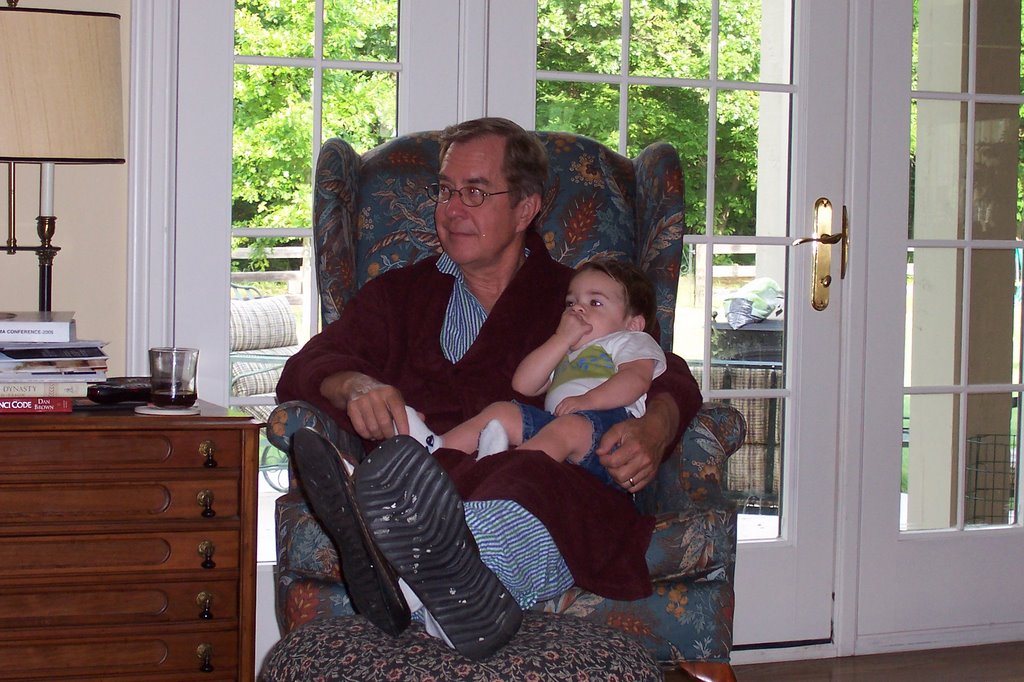
Paul watching Sesame Street with Wesley
Today I lost a great friend and mentor. Paul Bowles asked me to serve as youth minister at Bartlesville FUMC when I was in my last term at Hendrix. He had been the Tulsa DS, and I came to his office when I got back from Oxford, engaged to Lara. I told him that I'd be looking for a youth ministry job in the area, so to notify me if he heard of one coming available. I suppose I made a good impression on his secretary, and that turned out in my favor, because she was also his wife, Mary Jane! Paul did hear of a youth ministry job coming available, and it turned out to be at the church that he was being appointed to after coming off the cabinet. Paul and I were on the same wave-length. Once I took the position, Paul gave me his confidence. What a gift to a young, college grad. Over the next two years, he helped to guide me into the track for ministry. We always thought of Paul and Mary Jane as surrogate parents here in Oklahoma, and I know that they thought of us as "adopted kids." When we were weighing the decisions about moving back to Oklahoma from Arkansas, Paul was a wise colleague.
On the drive home from OKC today, I was thinking about the traits that Paul expressed. Paul was measured. He didn't seem to say something without really weighing it in his mind and really saying it. I don't think Paul had to backtrack very much. Paul and Mary Jane were the perfect yin and yang. Paul was more quiet and reserved, Mary Jane is more bubbly and vivacious. Paul did have an infectious little chuckle though.
What I keep thinking of today, what keeps bringing tears to my eyes, was the time that Paul shared with me the wedding liturgy that he wrote for his daughter and her groom. In the midst of him pointing out the different little points and subtle reasons he chose this or that way of saying something, I could tell he was proud of the liturgy, and it really was beautiful and poignant. I suppose what gets me is to know that he shared his pride with me--I suppose when a friend dies, we take some kind of comfort or solace in knowing we were important to that friend. Sharing pride makes us vulnerable, I believe--and that is one instance that lets me know that I was important to him as he was important to me.
For all of you reading this, do me a favor--send a prayer of comfort and healing to Mary Jane and their kids. What a sad loss. What a beautiful life.
Monday, June 19, 2006
First sermon in Morris
Until I get a church blog going here in Morris, this'll be the home of my sermons--
Here was today's--will write later about life in OK
Sermon texts
1 Sam 15:34-16:13
Mark 4:26-34
I hesitated at first to bring to you the Gospel reading today. This is the story that you’ve probably heard of as the mustard seed. It seems that God’s kingdom is not always spectacular and noticeable at first glance—in fact it rarely is. With the parable of the mustard seed, or the pine nut, as Eugene Peterson tells the story in his translation of the Bible that I read from today called the “Message,” we see Jesus comparing the Kingdom to something quite small and unremarkable.
I’m sure you’ve heard it said that “It’s always the last place you look.” I can attest to the truth of this statement, because unpacking boxes creates an enormous amount of mess, and I I’ve spent hours in the last week just looking for things that I had set down a few minutes before. It was only in recent years that I finally got the joke of this saying. Of course it is always the last place you look, because if you find what you’re looking for, you stop looking, right? Even if you find what you’re looking for in the first place you look, it is also the last place you look.
Jesus on several occasions shows us that what we usually don’t notice—what we call small and insignificant—are usually the most potent metaphors for God and God’s glorious kingdom. I hesitated to read this Gospel lesson today because I was just a bit concerned that those of you who helped me unload the U-haul would assume that the opposite might also be true. A 26 foot U-haul full of “stuff” is anything but inconspicuous. Lurching down 3rd street, scraping the branches of trees as I pulled it into our new home, I prayed, “Lord, give these people patience!” To my surprise and delight, we unloaded the van and even set up our bed in less than an hour! While Jesus tells us in the parables that good things come in small packages, I hope that today you might entertain the possibility that in my family’s presence with you here today, good things might also come in big packages too!
From what I’ve been able to tell from the bulletins I’ve seen, this congregation usually only hears one scripture lesson. I’ve been told that we pastors aren’t supposed to change anything in the worship service for at least a few months, and I had at first thought I’d base my sermon solely on the Samuel scripture—but this little pine nut kept coming to mind, and these scriptures go so well together.
Besides—I ride a bicycle okay, but I have never gotten up on a unicycle. Likewise, I need two scriptures to keep a sermon balanced and going in the right direction. With one I might just wobble around and fall on my face. I hope you don’t mind the change—I don’t preach a long time usually, and we’ll probably have room to hear two accounts of God’s story—our story—I think.
What strikes me about both of these scriptures that we heard today is that phrase from the Samuel reading—“the LORD does not see as mortals see; they look on the outward appearance, but the LORD looks on the heart.”
This is so clear in our Scriptures—that God always seems to choose those we’d least expect—Jacob and Joseph, Jonah and Ruth, Peter and Mary, even Jesus and David are unlikely candidates for God’s Spirit to stir within them. We all tend to judge on outward appearances.
Believe me, I’m aware of what my outward appearances are—young, green—and in my case the outward appearances are truly part of who I am—but thank God we have a Father in heaven that sees into our hearts--Sees our hearts not as fist-sized organs for pumping blood, but instead dwelling places large enough for God’s own Spirit!
I think this is why Jesus uses little seeds and little children and little farmers and little birds and flowers to point out the truth of God’s Kingdom. God is so immensely present in all things that sometimes it is the smallest things that give us an insight into who God is. We can wrap our feeble minds around the small things. The kingdom is indeed like a seed. Martin Luther said that the whole universe is infused with the totality of God—he said that even a grain of wheat, designed and brought into being by our creator, contains God’s presence. Meister Eckhart, a 14th century mystic and pastor, said, “Apprehend God in all things
for God is in all things.
Every single creature is full of God
and is a book about God.
Every creature is a word of God.
If I spent enough time with the tiniest creature -
even a caterpillar -
I would never have to prepare a sermon.
So full of God is every creature.
Mark tells us that Jesus gives us the Word as we are able to hear it. It has always been inspiring to me that God wants to be known and loved so much that we are given these stories that are so profound and yet so simple. A farmer casting out seed and then falling asleep—while the kingdom sprouts in his midst without him even knowing how. The kingdom is like that isn’t it?! How many times have you simply said something very offhandedly or perhaps even been unaware of how deeply you have touched someone else? My first year of ministry taught me this humbling parable in my own experience. Every week I struggled to find the right words to convey what I believe God wants me to convey, and then after I would deliver a sermon, I usually forgot about it and moved on to preparing for next week’s sermon—
but later in the week a parishioner might come up to me and tell me how something in particular I had said had really made a difference in their outlook that week. It may have even been something I forgot about saying!
What a gift it is to see the grain ready for the harvest! What a mystery it is to know that a simple smile or gesture of good will can make such a difference to someone.
The inverse is true as well of course, the slightest wag of the tongue, the smallest little whisper of a broken confidence sometimes bears the largest consequences of all—even while we “sleep” and forget about what we have said or done, our carelessness can sometimes spiral out of control.
Saul knew of this carelessness. You might ask yourself why Saul had fallen out of God’s favor—why, as the scriptures tell us, “God regretted ever having made Saul king.” It was just the slightest slip up—God had commanded Saul to conquer and kill the Amelekites—from top to bottom—from the King himself to the scrawniest goat in his Kingdom, and yet Saul had given permission to his warriors to take the choicest livestock as spoils of war.
As the scriptures show us, God loves shepherds—God is a shepherd. But God chooses a shepherd who would lay down his life for his flock, not lay down the lives of others for their flocks. Jesus tells us that he is the kind of Shepherd who would spend all day searching for the tiniest lost lamb, and Saul becomes the kind of shepherd who chooses the best livestock for himself.
Jesus chooses the mustard seed, and Samuel calls in Jesse’s youngest son from the fields where he is tending sheep and anoints him as the next king. Jesus says, “I am the Good Shepherd,” and David is celebrated as a fierce defender of his sheep—an unexpected King who comes out of the pasture to defeat giants and to lead a nation in the worship of God. Who would expect this of a shepherd boy?
Samuel tells us that God doesn’t see as we see, but God looks at a person’s heart. In a sense, Jesus is telling us the same thing with the parable of the mustard seed. The heart of a mustard seed is what it will become—and God doesn’t write off the seed because it is small and inconspicuous.
I have been a pastor for the past year at a small church, so I know that at times we can feel somewhat small and insignificant in comparison to the other more “successful” churches, the churches with so much to offer, the churches with the huge programs and the new buildings. But I can tell you that God chooses us as long as we have a heart for God. I’m not saying that God chooses us and not those big churches, because many of them are doing great things for the glory of God—but what I am saying is that God chooses us in the same measure that God chooses those other places.
God loves to dwell in our hearts, and physical size has no bearing on the size of heart. I can attest to you that in my short encounter with you thus far, I see a heart open to God—I see a pine tree with an Eagle’s nest. In the outpouring of help we have received, in the welcome baskets full of brownies and fresh vegetables and salsa and canned goods, in the pounding of steaks and beef and pound cake and other goods, in the in the ministries and motivation that I have witnessed at this past week’s church council meeting,
it is obvious to me that this church witnesses God’s presence. Being welcoming is a response to God’s grace pouring into and out of a place. Jesus says in the gospel of 7th chapter of John, “Let anyone who is thirsty come to me, and let anyone who believes in me drink. And out of the believer’s heart will come rivers of living water.” The Living water is the refreshing, purifying Holy Spirit—and in my opinion the Living water is often experienced as “welcoming.” Judging on our reception here, I would proclaim it as good news that this family of faith has felt the thirst in your throats and has dug the well to the heart of Christ—and that you drink from it and are now spilling over with the Spirit’s presence.
As your pastor, I see it as my calling to remind us of our thirst—remind us that this thirst creates possibilities for others to drink from the living waters which in turn flow out of our hearts.
Thirst causes us to see pine trees in pine nuts—to see shepherd boys as kings. Living this way takes constant hope. It takes a relentless hope in the possibilities of things unseen. But—as we have heard, God sees the things unseen, and God puts stock in mustard seeds, and shepherds, and us! amen
Here was today's--will write later about life in OK
Sermon texts
1 Sam 15:34-16:13
Mark 4:26-34
I hesitated at first to bring to you the Gospel reading today. This is the story that you’ve probably heard of as the mustard seed. It seems that God’s kingdom is not always spectacular and noticeable at first glance—in fact it rarely is. With the parable of the mustard seed, or the pine nut, as Eugene Peterson tells the story in his translation of the Bible that I read from today called the “Message,” we see Jesus comparing the Kingdom to something quite small and unremarkable.
I’m sure you’ve heard it said that “It’s always the last place you look.” I can attest to the truth of this statement, because unpacking boxes creates an enormous amount of mess, and I I’ve spent hours in the last week just looking for things that I had set down a few minutes before. It was only in recent years that I finally got the joke of this saying. Of course it is always the last place you look, because if you find what you’re looking for, you stop looking, right? Even if you find what you’re looking for in the first place you look, it is also the last place you look.
Jesus on several occasions shows us that what we usually don’t notice—what we call small and insignificant—are usually the most potent metaphors for God and God’s glorious kingdom. I hesitated to read this Gospel lesson today because I was just a bit concerned that those of you who helped me unload the U-haul would assume that the opposite might also be true. A 26 foot U-haul full of “stuff” is anything but inconspicuous. Lurching down 3rd street, scraping the branches of trees as I pulled it into our new home, I prayed, “Lord, give these people patience!” To my surprise and delight, we unloaded the van and even set up our bed in less than an hour! While Jesus tells us in the parables that good things come in small packages, I hope that today you might entertain the possibility that in my family’s presence with you here today, good things might also come in big packages too!
From what I’ve been able to tell from the bulletins I’ve seen, this congregation usually only hears one scripture lesson. I’ve been told that we pastors aren’t supposed to change anything in the worship service for at least a few months, and I had at first thought I’d base my sermon solely on the Samuel scripture—but this little pine nut kept coming to mind, and these scriptures go so well together.
Besides—I ride a bicycle okay, but I have never gotten up on a unicycle. Likewise, I need two scriptures to keep a sermon balanced and going in the right direction. With one I might just wobble around and fall on my face. I hope you don’t mind the change—I don’t preach a long time usually, and we’ll probably have room to hear two accounts of God’s story—our story—I think.
What strikes me about both of these scriptures that we heard today is that phrase from the Samuel reading—“the LORD does not see as mortals see; they look on the outward appearance, but the LORD looks on the heart.”
This is so clear in our Scriptures—that God always seems to choose those we’d least expect—Jacob and Joseph, Jonah and Ruth, Peter and Mary, even Jesus and David are unlikely candidates for God’s Spirit to stir within them. We all tend to judge on outward appearances.
Believe me, I’m aware of what my outward appearances are—young, green—and in my case the outward appearances are truly part of who I am—but thank God we have a Father in heaven that sees into our hearts--Sees our hearts not as fist-sized organs for pumping blood, but instead dwelling places large enough for God’s own Spirit!
I think this is why Jesus uses little seeds and little children and little farmers and little birds and flowers to point out the truth of God’s Kingdom. God is so immensely present in all things that sometimes it is the smallest things that give us an insight into who God is. We can wrap our feeble minds around the small things. The kingdom is indeed like a seed. Martin Luther said that the whole universe is infused with the totality of God—he said that even a grain of wheat, designed and brought into being by our creator, contains God’s presence. Meister Eckhart, a 14th century mystic and pastor, said, “Apprehend God in all things
for God is in all things.
Every single creature is full of God
and is a book about God.
Every creature is a word of God.
If I spent enough time with the tiniest creature -
even a caterpillar -
I would never have to prepare a sermon.
So full of God is every creature.
Mark tells us that Jesus gives us the Word as we are able to hear it. It has always been inspiring to me that God wants to be known and loved so much that we are given these stories that are so profound and yet so simple. A farmer casting out seed and then falling asleep—while the kingdom sprouts in his midst without him even knowing how. The kingdom is like that isn’t it?! How many times have you simply said something very offhandedly or perhaps even been unaware of how deeply you have touched someone else? My first year of ministry taught me this humbling parable in my own experience. Every week I struggled to find the right words to convey what I believe God wants me to convey, and then after I would deliver a sermon, I usually forgot about it and moved on to preparing for next week’s sermon—
but later in the week a parishioner might come up to me and tell me how something in particular I had said had really made a difference in their outlook that week. It may have even been something I forgot about saying!
What a gift it is to see the grain ready for the harvest! What a mystery it is to know that a simple smile or gesture of good will can make such a difference to someone.
The inverse is true as well of course, the slightest wag of the tongue, the smallest little whisper of a broken confidence sometimes bears the largest consequences of all—even while we “sleep” and forget about what we have said or done, our carelessness can sometimes spiral out of control.
Saul knew of this carelessness. You might ask yourself why Saul had fallen out of God’s favor—why, as the scriptures tell us, “God regretted ever having made Saul king.” It was just the slightest slip up—God had commanded Saul to conquer and kill the Amelekites—from top to bottom—from the King himself to the scrawniest goat in his Kingdom, and yet Saul had given permission to his warriors to take the choicest livestock as spoils of war.
As the scriptures show us, God loves shepherds—God is a shepherd. But God chooses a shepherd who would lay down his life for his flock, not lay down the lives of others for their flocks. Jesus tells us that he is the kind of Shepherd who would spend all day searching for the tiniest lost lamb, and Saul becomes the kind of shepherd who chooses the best livestock for himself.
Jesus chooses the mustard seed, and Samuel calls in Jesse’s youngest son from the fields where he is tending sheep and anoints him as the next king. Jesus says, “I am the Good Shepherd,” and David is celebrated as a fierce defender of his sheep—an unexpected King who comes out of the pasture to defeat giants and to lead a nation in the worship of God. Who would expect this of a shepherd boy?
Samuel tells us that God doesn’t see as we see, but God looks at a person’s heart. In a sense, Jesus is telling us the same thing with the parable of the mustard seed. The heart of a mustard seed is what it will become—and God doesn’t write off the seed because it is small and inconspicuous.
I have been a pastor for the past year at a small church, so I know that at times we can feel somewhat small and insignificant in comparison to the other more “successful” churches, the churches with so much to offer, the churches with the huge programs and the new buildings. But I can tell you that God chooses us as long as we have a heart for God. I’m not saying that God chooses us and not those big churches, because many of them are doing great things for the glory of God—but what I am saying is that God chooses us in the same measure that God chooses those other places.
God loves to dwell in our hearts, and physical size has no bearing on the size of heart. I can attest to you that in my short encounter with you thus far, I see a heart open to God—I see a pine tree with an Eagle’s nest. In the outpouring of help we have received, in the welcome baskets full of brownies and fresh vegetables and salsa and canned goods, in the pounding of steaks and beef and pound cake and other goods, in the in the ministries and motivation that I have witnessed at this past week’s church council meeting,
it is obvious to me that this church witnesses God’s presence. Being welcoming is a response to God’s grace pouring into and out of a place. Jesus says in the gospel of 7th chapter of John, “Let anyone who is thirsty come to me, and let anyone who believes in me drink. And out of the believer’s heart will come rivers of living water.” The Living water is the refreshing, purifying Holy Spirit—and in my opinion the Living water is often experienced as “welcoming.” Judging on our reception here, I would proclaim it as good news that this family of faith has felt the thirst in your throats and has dug the well to the heart of Christ—and that you drink from it and are now spilling over with the Spirit’s presence.
As your pastor, I see it as my calling to remind us of our thirst—remind us that this thirst creates possibilities for others to drink from the living waters which in turn flow out of our hearts.
Thirst causes us to see pine trees in pine nuts—to see shepherd boys as kings. Living this way takes constant hope. It takes a relentless hope in the possibilities of things unseen. But—as we have heard, God sees the things unseen, and God puts stock in mustard seeds, and shepherds, and us! amen
Saturday, June 10, 2006







Tuesday Drive
A big Uhaul, two cats and a baby boy, and a lot of help. We know the way, but now you do too.
Thursday, May 25, 2006

Diamonds on the Soles of my shoes

I was researching sermon ideas when I saw this photo of the Ascension by Salvador Dali. I was struck and delighted. My sermon will focus on not "gawking up at heaven" as the disciples did, but instead following the feet of Christ.
For the children's sermon, I decided to use the image to talk about my "beautiful feet." Feet are so taboo--I don't know many main-line congregations (including my own) who have the gumption to do an actual foot-washing service these days. I'll talk with the kids about how Isaiah says "How beautiful are the feet on the mountains of the one who brings [the Good News], and how that means my feet are beautiful too. Perhaps I'll talk about how I used to be ashamed of my feet because I had a big gap between my big toe and the rest of my toes--but now I'm proud of them because they bring me places where I can share the good news.
While daydreaming about the sermon, I also thought of a surprise for the kids

I'll show them the bottom of my feet and tell them I drew those crosses to remind me that everywhere I step, Jesus walks with me (name of the sermon is "Jesus Walks"--thanks Kanye). I'll ask them if their feet are beautiful too, then suggest that they carry the Good news that God loves the world--as Jesus asks his disciples to do at the Ascension.
Use it if it helps.
Peace
Wednesday, May 24, 2006
Balance to biblical lighting zaps

I've always been fascinated and bothered by the story of Elijah going to the mountain and calling down a cosmic meltdown against the Canaanite priests. Here's a story from Daniel that offers another approach to foreign "wise men." God intercedes to save the Chaldeans---
Also, this story reminds me of the scene in Last Temptation of Christ when Jesus tells Pilate, "I am the stone that smashes the clay feet of the statue." Pilate is best played in all cinematic history by David Bowie in this movie. Removed but curious, like he is trifling with the Jews for his own amusement. Perfectly imagined as a Roman governor.
5 reasons I think I'm cool
Here's an interesting tag--Actually, I don't quite know how a tag works, but I've seen the phrase on Katherine's blog and it's usually followed by a list. So here one that I thought of that's sincere and funny, and perhaps revealing. IF you want to try out the list in the comments, or on your own blog--have at it. The idea for this list was sparked when I was trying to get something off my computer that was bugging me, and I noticed that when we had gotten our new computer, I had named it HAL. I had forgotten that I had done that, so when I remembered that I had at one point, I felt really cool. Are there things that you feel are cool about you? I recommend getting them out in the open--it is quite liberating.
1. I named my computer HAL
2. I liked Bottle Rocket when Wes Anderson first gained a following. I remember making my high school friends watch it and feeling really cool that I liked it better than they did, and then Wes Anderson became a fairly respected director.
3. I have a scar on my knuckle where I punched a guy in the tooth in 7th grade gym class. He kept gleeking on me, and I told him to stop or else I'd spit a hawker in his face because I couldn't do it. So, he did and I spit a hawker in his face and hit him in the tooth. That was cool of me. Steve McQueen in training.
4. I've gotten comments lately on my posts--they are from people who I think sound really cool--so that means I must sound really cool.
5. Most of the time I drink plenty of water. I'm healthy.
Hmm, that was interesting. I felt like my ego took a nice, big stretch.
1. I named my computer HAL
2. I liked Bottle Rocket when Wes Anderson first gained a following. I remember making my high school friends watch it and feeling really cool that I liked it better than they did, and then Wes Anderson became a fairly respected director.
3. I have a scar on my knuckle where I punched a guy in the tooth in 7th grade gym class. He kept gleeking on me, and I told him to stop or else I'd spit a hawker in his face because I couldn't do it. So, he did and I spit a hawker in his face and hit him in the tooth. That was cool of me. Steve McQueen in training.
4. I've gotten comments lately on my posts--they are from people who I think sound really cool--so that means I must sound really cool.
5. Most of the time I drink plenty of water. I'm healthy.
Hmm, that was interesting. I felt like my ego took a nice, big stretch.
Thursday, May 11, 2006


Wednesday, May 10, 2006
Preparing to Confirm
This coming Sunday I'll be baptizing two "tweenagers" and then confirming them and three others in our Sunday service. Look for pix after the event on the church website. This is the third time I've taught or helped to teach confirmation, but the first time I'll be serving the "priestly function." For some reason, confirmation has always seemed very important to me. It is the time when kids take some time to consider an adult decision, and then most likely return to being kids. The event is usually understood better in retrospect, like when the two disciples who walked with Jesus to Emmaus thought after Jesus had disappeared from their midst, "How our hearts burned within us when he was walking with us and opening the scriptures."
With my own confirmation, I remember sitting in my dad's office at Sequoia UMC in Fayetteville. I don't remember much of the content. I remember going to a Shabbat service at the local synagogue and being mystified, then bored when the entirety (or what seemed like the entirety) of the service was conducted in Hebrew. I remember the Rabbi taking the scroll around the small congregation of people, and the way the people's eyes followed the Torah. I remember standing outside after the service was over and seeing a satellite drop out of the sky. I think I remember seeing it so clearly that I could actually make out the shape of the satellite. That's all I remember about confirmation. I don't remember any of the content. I think I actually remember the service when folks in the church lay their hands on me. I remember that being powerful and feeling really good. I remember feeling the pride and prayers of the people there coursing through their hands and into my hair and spine and shoulders. It really is a empowering feeling.
I suppose that's what I'm looking forward to most about this weekend. I hope that my confirmands remember that ritual. They can forget the content of the lessons we have had (I did), and they will probably remember the same things. We'll be visiting a Catholic, Episcopal, and Shabbat service this coming Friday, so they'll probably remember that and the service. Who knows? Maybe something will drop out of the sky and stamp the event in their mind too.
With my own confirmation, I remember sitting in my dad's office at Sequoia UMC in Fayetteville. I don't remember much of the content. I remember going to a Shabbat service at the local synagogue and being mystified, then bored when the entirety (or what seemed like the entirety) of the service was conducted in Hebrew. I remember the Rabbi taking the scroll around the small congregation of people, and the way the people's eyes followed the Torah. I remember standing outside after the service was over and seeing a satellite drop out of the sky. I think I remember seeing it so clearly that I could actually make out the shape of the satellite. That's all I remember about confirmation. I don't remember any of the content. I think I actually remember the service when folks in the church lay their hands on me. I remember that being powerful and feeling really good. I remember feeling the pride and prayers of the people there coursing through their hands and into my hair and spine and shoulders. It really is a empowering feeling.
I suppose that's what I'm looking forward to most about this weekend. I hope that my confirmands remember that ritual. They can forget the content of the lessons we have had (I did), and they will probably remember the same things. We'll be visiting a Catholic, Episcopal, and Shabbat service this coming Friday, so they'll probably remember that and the service. Who knows? Maybe something will drop out of the sky and stamp the event in their mind too.
Tuesday, April 18, 2006
OKLAHOMA
Here's why I haven't posted in so long--We've been in the process of getting information about my new church in Morris, Oklahoma (south of Tulsa and right outside Okmulgee) I just received the directory the other day--looks like a great church with lots of life and fun. I knew I'd fit in when I saw a caption of one of the pictures of the congregation re-painting and carpeting the sanctuary. The picture had a kid painting a wall with a grown up behind him--the caption read, "Paint the fence, Daniel-son." I laughed and then delighted that someone else brings up a Karate Kid reference 20 years after the move came out.
I really like the guy who is presently my DS, but he's moving to Tulsa to a church. He promises that the incoming DS is very competent and even better looking. I like Okies. We had a bang up Easter Sunday--107 in worship--that's the best in years I think. Everyone was really proud of the worship service, and we had a full-blown processional. See the church blog for pix.
Lara and I haven't begun to pack yet--too busy. I recently coordinated a regional conference for the NCC in Little Rock on the subject of Climate change, Creation, and the Church. It was a hoot. And now that we're getting close to 100 degrees in April, I doubt many will find the subject that laughable.
I really like the guy who is presently my DS, but he's moving to Tulsa to a church. He promises that the incoming DS is very competent and even better looking. I like Okies. We had a bang up Easter Sunday--107 in worship--that's the best in years I think. Everyone was really proud of the worship service, and we had a full-blown processional. See the church blog for pix.
Lara and I haven't begun to pack yet--too busy. I recently coordinated a regional conference for the NCC in Little Rock on the subject of Climate change, Creation, and the Church. It was a hoot. And now that we're getting close to 100 degrees in April, I doubt many will find the subject that laughable.
Wednesday, April 05, 2006

Tuesday, March 21, 2006


A very hard thing to do
I told my congregation on Sunday that Lara and I would be moving this coming June. We're really excited about our move, and sad at the same time because we're leaving beautiful people.
For all you preacher's out there--it is muy dificil. i remember standing there speaking and feeling like I was outside myself. I literally saw myself from behind nad heard myself talking, and being like "Okay, you've said enough, sit down and get to the worship service, that's why people are here."
Very surreal experience.
If you want to read the feeble words I was able to compose for that Sunday, go the church blog
peace
For all you preacher's out there--it is muy dificil. i remember standing there speaking and feeling like I was outside myself. I literally saw myself from behind nad heard myself talking, and being like "Okay, you've said enough, sit down and get to the worship service, that's why people are here."
Very surreal experience.
If you want to read the feeble words I was able to compose for that Sunday, go the church blog
peace
Tuesday, March 14, 2006

Saturday, March 04, 2006
Wednesday, February 22, 2006
Finally, someone said it!
"[T]he main objective of my writing today, is to nail the lie that to reject Zionism as it is practised today is in effect to be anti-Semitic, to be an inheritor of Hitler's racism. That argument, with the Holocaust in the background, is nothing other than moral blackmail. It is highly effective. It condemns many to silence who fear to be thought anti-Semitic. They are often the very opposite. They are often people whose heart bleeds at Israel's betrayal of its true heritage."
- Paul Oestreicher, chaplain at the University of Sussex, former member of the Church of England's general synod, and director of the Centre for International Reconciliation.
Oestreicher describes his heritage: "I say this as the child of a German Jewish-born father who escaped in time. His mother did not. I say it as a half-Jewish German child chased around a British playground in the second world war and taunted with 'he's not just a German, he's a Jew.' A double insult. But I say this too as a Christian priest who shares the historic guilt of all the churches. All Christians share a bloody inheritance."
- Paul Oestreicher, chaplain at the University of Sussex, former member of the Church of England's general synod, and director of the Centre for International Reconciliation.
Oestreicher describes his heritage: "I say this as the child of a German Jewish-born father who escaped in time. His mother did not. I say it as a half-Jewish German child chased around a British playground in the second world war and taunted with 'he's not just a German, he's a Jew.' A double insult. But I say this too as a Christian priest who shares the historic guilt of all the churches. All Christians share a bloody inheritance."
Friday, February 17, 2006
Procrastinate? I don't think twice, Cause I'm livin' in a map geek's paradise.

Google Earth. My new procrastinating tool of choice. It is so cool. Zoom in on real photos of your car parked in front of your house from space.
Tuesday, February 14, 2006
Wednesday, January 18, 2006
Funeral Sermon for a Home-Maker
Scripture is the Gospel Lesson from the UM Book of Worship Service of Death and Resurrection:
John 14: 1-4, 18-19, 25-27
From speaking with members of this family and the friends of Pat, I’ve gathered that this woman whose life, death, and resurrection we celebrate today took great pride in being a mother, a wife, a cook. She was a home – maker. What a tremendous profession that is! To make a home, to be the one that turns four walls and a roof into a place where “family” happens….this is indeed a great gift and one that Pat had great expertise in sharing with the world. It is a testimony to her great ability with “making a home” that her children are here today, and that though separated by many miles they seem to have the ability to “pick right up where they left off.”
Pat’s life as one who took great pride in “home-making” is also a witness to this beautiful, powerful, “Living” God who makes a home in us. We celebrate a God who gives us life by breathing into our very bodies the “Breath of Life” as is said in our Creation Story. This Holy Breath or Holy Spirit makes our bodies into temples, and if we live our life empowered and motivated by this Power, we’re made into “members of the One Body—the Living Body of the one who revealed God’s love and mercy in a unique way on Earth—the Body of the Living Christ.” This man called Jesus was also a “home-maker” without a place to “lay his head.” This wandering Rabbi taught his followers how to make a home in their hearts for the Living Loving Lord whom he knew as Abba—or Daddy. This man named Jesus taught us to make a home in our midst for reconciliation, renewal, refreshment, and renouncing our lives of self-centeredness. This man called Jesus also assured us that he was going ahead of us into Death and was going to make a road through Death to prepare a home for us beyond death. Just in case we were worried about making the trip there on our own, Christ promises us to return again and take us there himself. Do not worry, he says, I will not leave you here orphaned. Christ indeed does not leave us orphaned. The Living Christ makes a home here among us, “where two or three are gathered,” and with us shares our loss, our heartache, our joy, and our celebration.
We gather today to celebrate the home that Pat made for her family, we gather today to celebrate the God who makes a home in our midst and who now draws Pat into her eternal heavenly home. God is a home-maker for us in this life and in the next. God is trying to burst through our barriers and walls to make a home for us in this life. Pat believed in a man named Jesus who brought that vision to Earth in a unique way. After pass through the doorway of death, we enter the home that God prepares for us in the mysterious life to come. This is the home that God is attempting to utilize us to create on Earth. This is the home that Jesus calls us to in this life and after this life. In our gospel passage, Jesus comforts us with the knowledge that Jesus prepares a place for us there, and there are many rooms—room for everyone!
John 14: 1-4, 18-19, 25-27
From speaking with members of this family and the friends of Pat, I’ve gathered that this woman whose life, death, and resurrection we celebrate today took great pride in being a mother, a wife, a cook. She was a home – maker. What a tremendous profession that is! To make a home, to be the one that turns four walls and a roof into a place where “family” happens….this is indeed a great gift and one that Pat had great expertise in sharing with the world. It is a testimony to her great ability with “making a home” that her children are here today, and that though separated by many miles they seem to have the ability to “pick right up where they left off.”
Pat’s life as one who took great pride in “home-making” is also a witness to this beautiful, powerful, “Living” God who makes a home in us. We celebrate a God who gives us life by breathing into our very bodies the “Breath of Life” as is said in our Creation Story. This Holy Breath or Holy Spirit makes our bodies into temples, and if we live our life empowered and motivated by this Power, we’re made into “members of the One Body—the Living Body of the one who revealed God’s love and mercy in a unique way on Earth—the Body of the Living Christ.” This man called Jesus was also a “home-maker” without a place to “lay his head.” This wandering Rabbi taught his followers how to make a home in their hearts for the Living Loving Lord whom he knew as Abba—or Daddy. This man named Jesus taught us to make a home in our midst for reconciliation, renewal, refreshment, and renouncing our lives of self-centeredness. This man called Jesus also assured us that he was going ahead of us into Death and was going to make a road through Death to prepare a home for us beyond death. Just in case we were worried about making the trip there on our own, Christ promises us to return again and take us there himself. Do not worry, he says, I will not leave you here orphaned. Christ indeed does not leave us orphaned. The Living Christ makes a home here among us, “where two or three are gathered,” and with us shares our loss, our heartache, our joy, and our celebration.
We gather today to celebrate the home that Pat made for her family, we gather today to celebrate the God who makes a home in our midst and who now draws Pat into her eternal heavenly home. God is a home-maker for us in this life and in the next. God is trying to burst through our barriers and walls to make a home for us in this life. Pat believed in a man named Jesus who brought that vision to Earth in a unique way. After pass through the doorway of death, we enter the home that God prepares for us in the mysterious life to come. This is the home that God is attempting to utilize us to create on Earth. This is the home that Jesus calls us to in this life and after this life. In our gospel passage, Jesus comforts us with the knowledge that Jesus prepares a place for us there, and there are many rooms—room for everyone!
Wednesday, December 28, 2005
Monday, December 26, 2005
My sentiments exactly
This recent article by Newsweek's Anna Quindlen really sums up my thoughts on the whole idiot wind effort on the part of some Christians to boycott some stores for not using the words Merry Christmas instead of Happy Holidays. I guess we'll start yapping about any old thing that will take the focus off of Christians coming to terms with the confronting reality of a vibrant faith. Christian Peacemaker Team is still missing in Baghdad while giving themselves as a sacrifice to the ideal of non-violent resistance which was inspired by some of our faith's greats (including the original), and instead of rallying around what they have brought to the world stage, American Christians get caught up in a bunch of bull-shit. When will we wake up and take the mantle?
Tuesday, December 20, 2005
"Birth of the Light" Christmas Sermon
Over the past weeks of the Advent season, we have looked into the faces of the cherished figures of the Nativity. During the first week, amidst the celebration of the Hanging of the Greens, the Angels were our focus. We asked ourselves what kind of signs we might be given by the angels we might knowingly or more likely unknowingly encounter in our own lives. The next week, we focused on the role that the shepherds and livestock played in our great story, and how they were open to God’s announcement of incarnation because of their willingness to “keep watch” and “listen.” Then we focused on Joseph, the silent guardian of God as a baby. We looked at his great witness to follow God’s promptings and the miracle of his belief and faith in the message brought to him by the angel. Last week we reflected on Mary’s Song of Magnification of the works of God. And today we turn our attention to the manger. That centerpiece to the nativity story—and what it holds: The center of the whole world.
John’s prologue is revered by many as the most beautiful words of the entire Bible. It tells the story of our Christ in a unique way in the Bible. Whereas Matthew and Luke tell the story of Jesus’ humble beginnings in the manger, and Mark’s hurried gospel doesn’t even reflect on the Christ’s origins, John’s Gospel tells that Christ as the Eternal Logos or Word was with God and Part of God before the Creation of the world.
It is from John that we learn that this man traveled around the lakes and mountains and cities of Palestine 2000 years ago was no ordinary man, but instead the “Word in Flesh.” It tells that how everything was created through the Word, and that therefore all creation was known by him and all creation has a connection to him. God creates by speaking, and the Word is the manifestation of that aspect of God.
We also learn that this creative Word is Light—as Isaiah says, the “people who have walked in the darkness have seen a great light” Isaiah goes on to talk about a child who will one day be born who will bear this light, and John identifies this light as the person whose birth we celebrate this day.
Last night as I read this scripture as our last lesson to the lessons and carols service, we enacted the scripture as it was read. We began in darkness, as we heard about the Word being in the beginning with God and nothing else. This was before the creation of anything, including light and darkness. And then I lit the Christ candle as we heard about the Word’s life being the light of all people. As the light went around the room and illuminated the faces of everyone present, I read the words that contain the whole Gospel in two sentences, “But to all who received him, who believed in his name, he gave power to become children of God, 13who were born, not of blood or of the will of the flesh or of the will of man, but of God. 14And the Word became flesh and lived among us, and we have seen his glory, the glory as of a father’s only son, full of grace and truth.”
I enacted this part of the service last night because I wanted us to hear it and understand it as being true and present in this moment with us. John doesn’t tell the story of something that happened a long time ago and is merely an occurence of the past—John writes about a light that shines in darkness. The darkness of time or place does not overcome the light that continues to shine.
This is the amazing thing about the Gospel. WE have walked in the darkness. We come from all walks of life. Some of us are old, some of us are young, some of us are hometown people, some of us are transplants from another place, some of us are rich, some of us are poor, some of us have loved, some of us have loved and lost. Here’s what we all have in common—we have all walked in the darkness. Though it would seem that some of us have sinned in greater frequency or greater magnitude than others, we have all been born with something missing in our lives, a “God shaped hole in our hearts” as some people call it. Isaiah and John calls it darkness.
But the good news is this, we have seen a great light, and furthermore, that Light comes to us to receive. Graciously, the Light has come toward us and continues to come toward us. As long as we reject the great filling light in our presence, we will continue to walk in darkness. As long as we refuse to forgive and love and share and make peace, that “God shaped hole” will continue to be a God shaped hole. Why? Because God loves us so much that God gave us freedom. The light is not invasive. It is persuasive, like a friend holding a candle toward you for you to light your candle on.
And if we do light our candle with the Light of God, IF we do allow our soul to be ignited with the awesome power of love and forgiveness and peace and sharing, our faces will become illuminated in the presence of the Living Christ. We will finally see ourselves and our neighbors as Children of God. This is the message that the Living Word would have us understand. After all of creation was spoken into being through the creative power of the Word and Breath in Genesis 1, there is a pronouncement that is as creative and life giving as our identity: God is happy with God’s creation and exclaims, “It is good!”
Yes, we are children of God from the very beginning, but we enslave ourselves to lesser parents. We walk in darkness and we look to other sources for parental comfort, don’t we? We make ourselves “Children of Exclusiveness” or “Children of Posessions” or “Children of Beauty” or “Children of Hollow Happiness.” Jesus says later in John’s gospel that “this is the judgment of the world, that the light has come into the world, and people loved darkness rather than light.” Why do we love the darkness rather than the light?
Because the light comes to earth in a feeding trough…The Light takes a cross on his back and asks us to as well. The Light asks us to change our direction in life. We fill the God shaped hole with other things, and we think we are full until the little cracks appear in our carefully tailored lives. God’s light continues to shine in our direction though, and it continues to come to us. All we have to do is dip our candle toward the one being offered to us. All we must do is dip our heads down and ask for forgiveness. All we must do is forgive others as God forgives us.
When we take on the light, our burdens are taken on by that little child laying in a manger. He is willing and able to carry our load. As things become lighter in our lives, we may even find ourselves sharing the light with others. We may turn to the person next to us and offer the Light of Christ to them.
In so doing, the brightness grows! God’s Kingdom is made manifest on earth, and more faces glow with the good news of the Word and Light. Just as we saw last night, the Light comes in the flesh because the Living Christ is alive in our flesh. The very enactment of the Christmas story in our midst is shown in Our faces glowing in the candlelight as we sing hymns declaring the wonder and mystery of God’s humble birth. The Light becomes brighter through our sharing, and more people in the shadows are able to see it. But for us to share the Light and be the Living Christ, we must walk toward the shadows. This is what Christ exhibited in a life in which he was reprimanded by the “holy men” for going into the houses of tax collectors and prostitutes.
This birth that we celebrate today is not just a birth in a stable 2000 years ago, it is a birth waiting to happen. Every moment holds the potential for this birth because this birth is the birth of the Light in the world of darkness. The darkness cannot overcome it, and as long as we hold the candle of our faith in front of us, guiding us, we cannot be overcome. Even in dying, the martyrs of our faith were able to shed light on the darkness. As we gather to share this sacred meal together, let us imagine ourselves receiving the light just as we did last night with candles. We take this meal for the same purpose—to bring more fuel for the fire, to help the light shine brighter through our participation in the Living Christ through the power of the Holy Spirit. The Light of God wants to enlighten your life because God wants you to know who you really are—a shining faced Child of God! Amen.
John’s prologue is revered by many as the most beautiful words of the entire Bible. It tells the story of our Christ in a unique way in the Bible. Whereas Matthew and Luke tell the story of Jesus’ humble beginnings in the manger, and Mark’s hurried gospel doesn’t even reflect on the Christ’s origins, John’s Gospel tells that Christ as the Eternal Logos or Word was with God and Part of God before the Creation of the world.
It is from John that we learn that this man traveled around the lakes and mountains and cities of Palestine 2000 years ago was no ordinary man, but instead the “Word in Flesh.” It tells that how everything was created through the Word, and that therefore all creation was known by him and all creation has a connection to him. God creates by speaking, and the Word is the manifestation of that aspect of God.
We also learn that this creative Word is Light—as Isaiah says, the “people who have walked in the darkness have seen a great light” Isaiah goes on to talk about a child who will one day be born who will bear this light, and John identifies this light as the person whose birth we celebrate this day.
Last night as I read this scripture as our last lesson to the lessons and carols service, we enacted the scripture as it was read. We began in darkness, as we heard about the Word being in the beginning with God and nothing else. This was before the creation of anything, including light and darkness. And then I lit the Christ candle as we heard about the Word’s life being the light of all people. As the light went around the room and illuminated the faces of everyone present, I read the words that contain the whole Gospel in two sentences, “But to all who received him, who believed in his name, he gave power to become children of God, 13who were born, not of blood or of the will of the flesh or of the will of man, but of God. 14And the Word became flesh and lived among us, and we have seen his glory, the glory as of a father’s only son, full of grace and truth.”
I enacted this part of the service last night because I wanted us to hear it and understand it as being true and present in this moment with us. John doesn’t tell the story of something that happened a long time ago and is merely an occurence of the past—John writes about a light that shines in darkness. The darkness of time or place does not overcome the light that continues to shine.
This is the amazing thing about the Gospel. WE have walked in the darkness. We come from all walks of life. Some of us are old, some of us are young, some of us are hometown people, some of us are transplants from another place, some of us are rich, some of us are poor, some of us have loved, some of us have loved and lost. Here’s what we all have in common—we have all walked in the darkness. Though it would seem that some of us have sinned in greater frequency or greater magnitude than others, we have all been born with something missing in our lives, a “God shaped hole in our hearts” as some people call it. Isaiah and John calls it darkness.
But the good news is this, we have seen a great light, and furthermore, that Light comes to us to receive. Graciously, the Light has come toward us and continues to come toward us. As long as we reject the great filling light in our presence, we will continue to walk in darkness. As long as we refuse to forgive and love and share and make peace, that “God shaped hole” will continue to be a God shaped hole. Why? Because God loves us so much that God gave us freedom. The light is not invasive. It is persuasive, like a friend holding a candle toward you for you to light your candle on.
And if we do light our candle with the Light of God, IF we do allow our soul to be ignited with the awesome power of love and forgiveness and peace and sharing, our faces will become illuminated in the presence of the Living Christ. We will finally see ourselves and our neighbors as Children of God. This is the message that the Living Word would have us understand. After all of creation was spoken into being through the creative power of the Word and Breath in Genesis 1, there is a pronouncement that is as creative and life giving as our identity: God is happy with God’s creation and exclaims, “It is good!”
Yes, we are children of God from the very beginning, but we enslave ourselves to lesser parents. We walk in darkness and we look to other sources for parental comfort, don’t we? We make ourselves “Children of Exclusiveness” or “Children of Posessions” or “Children of Beauty” or “Children of Hollow Happiness.” Jesus says later in John’s gospel that “this is the judgment of the world, that the light has come into the world, and people loved darkness rather than light.” Why do we love the darkness rather than the light?
Because the light comes to earth in a feeding trough…The Light takes a cross on his back and asks us to as well. The Light asks us to change our direction in life. We fill the God shaped hole with other things, and we think we are full until the little cracks appear in our carefully tailored lives. God’s light continues to shine in our direction though, and it continues to come to us. All we have to do is dip our candle toward the one being offered to us. All we must do is dip our heads down and ask for forgiveness. All we must do is forgive others as God forgives us.
When we take on the light, our burdens are taken on by that little child laying in a manger. He is willing and able to carry our load. As things become lighter in our lives, we may even find ourselves sharing the light with others. We may turn to the person next to us and offer the Light of Christ to them.
In so doing, the brightness grows! God’s Kingdom is made manifest on earth, and more faces glow with the good news of the Word and Light. Just as we saw last night, the Light comes in the flesh because the Living Christ is alive in our flesh. The very enactment of the Christmas story in our midst is shown in Our faces glowing in the candlelight as we sing hymns declaring the wonder and mystery of God’s humble birth. The Light becomes brighter through our sharing, and more people in the shadows are able to see it. But for us to share the Light and be the Living Christ, we must walk toward the shadows. This is what Christ exhibited in a life in which he was reprimanded by the “holy men” for going into the houses of tax collectors and prostitutes.
This birth that we celebrate today is not just a birth in a stable 2000 years ago, it is a birth waiting to happen. Every moment holds the potential for this birth because this birth is the birth of the Light in the world of darkness. The darkness cannot overcome it, and as long as we hold the candle of our faith in front of us, guiding us, we cannot be overcome. Even in dying, the martyrs of our faith were able to shed light on the darkness. As we gather to share this sacred meal together, let us imagine ourselves receiving the light just as we did last night with candles. We take this meal for the same purpose—to bring more fuel for the fire, to help the light shine brighter through our participation in the Living Christ through the power of the Holy Spirit. The Light of God wants to enlighten your life because God wants you to know who you really are—a shining faced Child of God! Amen.
Thursday, November 17, 2005
Prayer Answered
Lately I have felt a little down, a little uninspired. It’s hard sometimes being the pastor of a church and coming up with some words of inspiration every Sunday. On Tuesday night, I had just wrestled with my son trying to get his diaper and PJs on, and I was sitting there holding him. I asked my Wesley, “You’re such an inspiration to me, but I need God to show me something that will inspire me to write a good sermon this week. I need God to give me a little something, letting me know that I am indeed called to be doing what I am doing.” Questions raised at charge conference about my salary have gotten me feeling defensive about my worth to this community. What is it that I do for them exactly? I don’t render any service but my presence in times of need. I don’t produce any product except for some words on Sunday, hopefully helping people deepen their relationship with God.
I took these questions with me outside to smoke my pipe in what had turned out to be a cold night. I lit my pipe and stood there focused on the shed in my back yard. As I was standing there, it suddenly grew brighter. The trees cast shadows on the grass. I looked up in the sky and saw a full moon. The low hanging clouds were moving rather quickly across the sky, and as they passed, the moon would peek out from behind them and illuminate my whole yard. The radiance of the moon lit up the contours of each cloud moving across the dark sky. I felt like I was on the bottom of the ocean looking up at silver gilded hulls of great ships, moving in from the north. From time to time, Mars or Jupiter would also peek through a small break in the clouds, framing the planet momentarily. It looked surreal, like a photo negative. As the moon drew my yard out of darkness and cast shadows of the fence and trees, the moment also drew my mind out of the darkness of self-doubt and worry. I went inside to get Lara, and she had just finished putting Wesley down for the night. I asked her to get a coat and come out with me. She was thrilled by the sight as well, and pointed out that the moon was so bright that as the clouds grew thinner at the edges, you could see the water vapors in little wispy rainbows. Rainbows at night! Symbols of God’s promise that aren’t restrained to the light of day. Even on a cold dark night, the moon reflects the piercing light of the sun to the extent that it can broken into colors by the prism of water vapor. What a miracle! I was overcome with joy, and took it as an answer to my prayer.
I took these questions with me outside to smoke my pipe in what had turned out to be a cold night. I lit my pipe and stood there focused on the shed in my back yard. As I was standing there, it suddenly grew brighter. The trees cast shadows on the grass. I looked up in the sky and saw a full moon. The low hanging clouds were moving rather quickly across the sky, and as they passed, the moon would peek out from behind them and illuminate my whole yard. The radiance of the moon lit up the contours of each cloud moving across the dark sky. I felt like I was on the bottom of the ocean looking up at silver gilded hulls of great ships, moving in from the north. From time to time, Mars or Jupiter would also peek through a small break in the clouds, framing the planet momentarily. It looked surreal, like a photo negative. As the moon drew my yard out of darkness and cast shadows of the fence and trees, the moment also drew my mind out of the darkness of self-doubt and worry. I went inside to get Lara, and she had just finished putting Wesley down for the night. I asked her to get a coat and come out with me. She was thrilled by the sight as well, and pointed out that the moon was so bright that as the clouds grew thinner at the edges, you could see the water vapors in little wispy rainbows. Rainbows at night! Symbols of God’s promise that aren’t restrained to the light of day. Even on a cold dark night, the moon reflects the piercing light of the sun to the extent that it can broken into colors by the prism of water vapor. What a miracle! I was overcome with joy, and took it as an answer to my prayer.
Monday, October 10, 2005
Sunday, October 09, 2005
Oct 9 Sermon, Prop. 21?
Sometimes the Good News sounds fine and dandy until Jesus tweaks the story just a little bit. We have come to expect the Kingdom of God to include the last and the least. This is a familiar refrain in the stories of Jesus. It makes us feel really good about ourselves since we have claimed the invitation, and are on the inside. Today’s lesson follows the general rule to Kingdom parables. That is, until the end—when we perk our ears up and wonder if we had accidently fallen asleep and made up the ending. Luckily, I read this scripture earlier in the week before I had my oral surgery, and therefore did not attribute the odd behavior exhibited in this scripture to my pain medication.
The King sends out the messengers to tell of the wedding banquet for his son. If we interpret the story as Matthew’s followers probably did, we hear in the symbols the familiar setup. God is the King, and the Good News of Christ is the Banquet for his son. The messengers are the prophets who have been sent by God to his people—to spread the news of the coming of Christ. The people refuse, and so the King, feeling somewhat rebuffed, sends out the messengers again, in order that they have sufficient notice of the announcement. This time they kill the messenger/prophets, which is a common accusation of Jesus against the people of Israel, especially in Matthew. Think for instance of Matthew 23: 37, where upon arriving at Jerusalem for the first time in his ministry, Jesus utters the famous phrase, “"Jerusalem, Jerusalem, the city that kills the prophets and stones those who are sent to it! How often have I desired to gather your children together as a hen gathers her brood under her wings, and you were not willing!”
Matthew was writing his gospel in the midst of the downfall of Jerusalem and the destruction of the Temple by the Romans in 70AD, and he believed this was a punishment for the people of Jerusalem’s unbelief. This aspect of the story is different from the perhaps more familiar version of the story in Luke 14:15-24 where the King is simply rebuffed by the townspeople and therefore sends invitations to the people in the highways and the hedges.
Also unique to Matthew’s version of this parable is the King’s response to the wedding guest who is not properly dressed. This being so unique, it caught my eye and became the focus of my preparations for today’s sermon.
Why in the world would Jesus tell us that God cares about what clothes we show up to the banquet in? Doesn’t Jesus usually tell us that God accepts us no matter who we are or what kind of mess we usually show up to the banquet of his Grace in? Doesn’t this seem to chafe against our common understanding of the Gospel? What could this possibly symbolize, that could justify the King telling his servants to “bind this man hand and foot, and cast him into the outer darkness, where there is weeping and gnashing of teeth?” Matthew clearly thinks there is something more to the Christian life than just “showing up” to the invitation. Contrary to the Jesus of our popular conceptualization, Matthew tells of him reporting that “many are called, but few are chosen.”
So what do we do with this text? Do we move it over to the category of scriptures that may have had some use at some point, but clearly don’t belong in our repertoire of favorite scriptures for “making disciples.” After all, how many “Matthew 22:14” posters have you seen at football games. Perhaps this scripture just belongs with the Psalms about bashing babies’ heads against the rocks, or the Levitical laws about selling your son or daughter into slavery for misbehaving. Or perhaps we should try and parse out what it may be saying to us behind all the rough veneer.
Perhaps instead of always focusing on why we are accepted to the party, we should pay attention to what kind of attire we are wearing.
The Bible speaks quite frequently about clothing. In the Genesis story, we are told that God made “garments out of skin” for Adam and Eve after they ate of the fruit of the tree of knowledge of good and evil. Joseph draws the jealous rage of his brothers for wearing the “many colored coat” that his father gave him. Jesus is said to have worn a seamless robe that the soldiers gambled for at the foot of his cross. A woman was also healed by touching his garment.
So what about these wedding robes that seem so important to the host of the banquet? In this story, the “wedding robe” is a symbol of something. Isaiah 61:10 tells us about “garments of salvation, and robes of righteousness.” In 1st Thessalonians, Paul tells us to put on the breastplate of faith and love, and the helmet of hope and salvation. What is it that a wedding robe symbolizes anyway? This is a symbol that has been somewhat lost to us because we no longer observe the practice of wedding robes. A wedding robe was given by the host to all who attended the banquet in order to “level the playing field.” Weddings weren’t an opportunity for the wealthy guests to show off their wealth and the poor guests to feel bad about their shabby attire. The host of the wedding provided beautiful robes so that everyone in attendance would be focused on the joy of the festivities instead of who had what. Viewed through this lens, the person who took off his wedding robe is trying to draw attention to himself. He is accepting the generosity of the host, but he is trying to do so on his own terms.
I believe today’s epistle lesson fits quite nicely with today’s Gospel lesson. Paul repeats over and over again in his letter to Phillipi to “Rejoice in the Lord, Always.” As I’ve mentioned before, this is Paul’s happiest letter, and it is written from a prison cell. Paul has tapped into the well of Christ in a way that he is now overflowing with the peace and love. He declares that this joyful exuberance surpasses all understanding, yet it guards our hearts and minds.
At the beginning of today’s reading, he pleads with two women, Euodia and Syntyche, to put their disagreement behind them and “be of the same mind.” Perhaps Paul is familiar with the “wrong attire” and is assuring his fellow banquet guests of the proper attire. Perhaps we can also hear Paul beckoning us toward the life of the light today. Perhaps when we let grudges over hurt feelings or petty jealousies stand in the way of joyful fellowship, we are wearing the wrong attire for God’s banquet! Perhaps when we allow our disagreements about the particularities to blind us to the larger truth of God’s grace, we are wearing the wrong attire to God’s banquet! Perhaps when we infect our church family with spite against someone we have a personal disagreement with, we are wearing the wrong attire to God’s banquet!
Christian friends: showing up to the banquet with an invitation in hand is a wonderful first step to accepting God’s grace. We as Wesleyans however, believe that grace continues to grow and bloom and bear fruit in our lives through the miracle of “sanctifying grace.” This is the art of living lives of personal and social holiness to be a joyful witness to the world about God’s grace and salvation. It is basically “donning our wedding robes” for the entire banquet, not taking them off after we’ve made it through the door. The idea that “many are called, but few are chosen” is Jesus’ way of telling us that the work of salvation continues in our life even after we’ve accepted the invitation. In case you haven’t done so yet, I will once again remind you to take a copy of the Book of Discipline’s paragraphs on church membership.
Church membership means we are accountable to one another, and we have the privilege to be so. It is about choosing a life of reconciliation and love over gossip and grudge matches. Sisters and brothers, I will tell you as Paul told the church at Philippi, if there are two of you who are harboring feelings against each other, please put away your ill feelings for the sake of the Gospel! Paul tells us to “be of the same mind.” This mind is the mind of Christ, and Paul assures us that “we can do all things through Christ who gives us strength.”
Did you know that in the early church, when converts to the faith were being baptized, they removed all their clothing and went down into the water, then after being baptized in the name of the Trinity, they walked up out of the baptismal chamber, stomped on their old clothing, and were given new bright white robes? The act symbolized shedding the constraints of this world and even participating in the death of Christ. The waters were entered naked to symbolize our rebirth into the Kingdom Life. The new white clothing clebrated the purity of Christ that Christians were then privileged to put on and wear with joy and righteousness. New Christians stomped on their old clothing as a symbol of rejecting the sin they had left behind on the other side of the baptismal waters.
We are invited to a great feast - a wedding feast. Let us not make light of the invitation and refuse to come. We are not required to provide our own gowns and tuxedos. It is not up to us to fashion our own garments. Instead, we are to look to God, who saw to the needs of Adam and Eve, who covered their shame and made them to shine like the sun. We have a tailor of awesome reputation, one who, quite literally, fashions the stars and clothes the lilies of the field. In giving us Christ Jesus, God fashions for us a garment of great praise, a robe of eternal worth. We ought not be so proud as to insist on clothing ourselves, but rather humble our hearts, put on love, and clothe ourselves with Christ!
The King sends out the messengers to tell of the wedding banquet for his son. If we interpret the story as Matthew’s followers probably did, we hear in the symbols the familiar setup. God is the King, and the Good News of Christ is the Banquet for his son. The messengers are the prophets who have been sent by God to his people—to spread the news of the coming of Christ. The people refuse, and so the King, feeling somewhat rebuffed, sends out the messengers again, in order that they have sufficient notice of the announcement. This time they kill the messenger/prophets, which is a common accusation of Jesus against the people of Israel, especially in Matthew. Think for instance of Matthew 23: 37, where upon arriving at Jerusalem for the first time in his ministry, Jesus utters the famous phrase, “"Jerusalem, Jerusalem, the city that kills the prophets and stones those who are sent to it! How often have I desired to gather your children together as a hen gathers her brood under her wings, and you were not willing!”
Matthew was writing his gospel in the midst of the downfall of Jerusalem and the destruction of the Temple by the Romans in 70AD, and he believed this was a punishment for the people of Jerusalem’s unbelief. This aspect of the story is different from the perhaps more familiar version of the story in Luke 14:15-24 where the King is simply rebuffed by the townspeople and therefore sends invitations to the people in the highways and the hedges.
Also unique to Matthew’s version of this parable is the King’s response to the wedding guest who is not properly dressed. This being so unique, it caught my eye and became the focus of my preparations for today’s sermon.
Why in the world would Jesus tell us that God cares about what clothes we show up to the banquet in? Doesn’t Jesus usually tell us that God accepts us no matter who we are or what kind of mess we usually show up to the banquet of his Grace in? Doesn’t this seem to chafe against our common understanding of the Gospel? What could this possibly symbolize, that could justify the King telling his servants to “bind this man hand and foot, and cast him into the outer darkness, where there is weeping and gnashing of teeth?” Matthew clearly thinks there is something more to the Christian life than just “showing up” to the invitation. Contrary to the Jesus of our popular conceptualization, Matthew tells of him reporting that “many are called, but few are chosen.”
So what do we do with this text? Do we move it over to the category of scriptures that may have had some use at some point, but clearly don’t belong in our repertoire of favorite scriptures for “making disciples.” After all, how many “Matthew 22:14” posters have you seen at football games. Perhaps this scripture just belongs with the Psalms about bashing babies’ heads against the rocks, or the Levitical laws about selling your son or daughter into slavery for misbehaving. Or perhaps we should try and parse out what it may be saying to us behind all the rough veneer.
Perhaps instead of always focusing on why we are accepted to the party, we should pay attention to what kind of attire we are wearing.
The Bible speaks quite frequently about clothing. In the Genesis story, we are told that God made “garments out of skin” for Adam and Eve after they ate of the fruit of the tree of knowledge of good and evil. Joseph draws the jealous rage of his brothers for wearing the “many colored coat” that his father gave him. Jesus is said to have worn a seamless robe that the soldiers gambled for at the foot of his cross. A woman was also healed by touching his garment.
So what about these wedding robes that seem so important to the host of the banquet? In this story, the “wedding robe” is a symbol of something. Isaiah 61:10 tells us about “garments of salvation, and robes of righteousness.” In 1st Thessalonians, Paul tells us to put on the breastplate of faith and love, and the helmet of hope and salvation. What is it that a wedding robe symbolizes anyway? This is a symbol that has been somewhat lost to us because we no longer observe the practice of wedding robes. A wedding robe was given by the host to all who attended the banquet in order to “level the playing field.” Weddings weren’t an opportunity for the wealthy guests to show off their wealth and the poor guests to feel bad about their shabby attire. The host of the wedding provided beautiful robes so that everyone in attendance would be focused on the joy of the festivities instead of who had what. Viewed through this lens, the person who took off his wedding robe is trying to draw attention to himself. He is accepting the generosity of the host, but he is trying to do so on his own terms.
I believe today’s epistle lesson fits quite nicely with today’s Gospel lesson. Paul repeats over and over again in his letter to Phillipi to “Rejoice in the Lord, Always.” As I’ve mentioned before, this is Paul’s happiest letter, and it is written from a prison cell. Paul has tapped into the well of Christ in a way that he is now overflowing with the peace and love. He declares that this joyful exuberance surpasses all understanding, yet it guards our hearts and minds.
At the beginning of today’s reading, he pleads with two women, Euodia and Syntyche, to put their disagreement behind them and “be of the same mind.” Perhaps Paul is familiar with the “wrong attire” and is assuring his fellow banquet guests of the proper attire. Perhaps we can also hear Paul beckoning us toward the life of the light today. Perhaps when we let grudges over hurt feelings or petty jealousies stand in the way of joyful fellowship, we are wearing the wrong attire for God’s banquet! Perhaps when we allow our disagreements about the particularities to blind us to the larger truth of God’s grace, we are wearing the wrong attire to God’s banquet! Perhaps when we infect our church family with spite against someone we have a personal disagreement with, we are wearing the wrong attire to God’s banquet!
Christian friends: showing up to the banquet with an invitation in hand is a wonderful first step to accepting God’s grace. We as Wesleyans however, believe that grace continues to grow and bloom and bear fruit in our lives through the miracle of “sanctifying grace.” This is the art of living lives of personal and social holiness to be a joyful witness to the world about God’s grace and salvation. It is basically “donning our wedding robes” for the entire banquet, not taking them off after we’ve made it through the door. The idea that “many are called, but few are chosen” is Jesus’ way of telling us that the work of salvation continues in our life even after we’ve accepted the invitation. In case you haven’t done so yet, I will once again remind you to take a copy of the Book of Discipline’s paragraphs on church membership.
Church membership means we are accountable to one another, and we have the privilege to be so. It is about choosing a life of reconciliation and love over gossip and grudge matches. Sisters and brothers, I will tell you as Paul told the church at Philippi, if there are two of you who are harboring feelings against each other, please put away your ill feelings for the sake of the Gospel! Paul tells us to “be of the same mind.” This mind is the mind of Christ, and Paul assures us that “we can do all things through Christ who gives us strength.”
Did you know that in the early church, when converts to the faith were being baptized, they removed all their clothing and went down into the water, then after being baptized in the name of the Trinity, they walked up out of the baptismal chamber, stomped on their old clothing, and were given new bright white robes? The act symbolized shedding the constraints of this world and even participating in the death of Christ. The waters were entered naked to symbolize our rebirth into the Kingdom Life. The new white clothing clebrated the purity of Christ that Christians were then privileged to put on and wear with joy and righteousness. New Christians stomped on their old clothing as a symbol of rejecting the sin they had left behind on the other side of the baptismal waters.
We are invited to a great feast - a wedding feast. Let us not make light of the invitation and refuse to come. We are not required to provide our own gowns and tuxedos. It is not up to us to fashion our own garments. Instead, we are to look to God, who saw to the needs of Adam and Eve, who covered their shame and made them to shine like the sun. We have a tailor of awesome reputation, one who, quite literally, fashions the stars and clothes the lilies of the field. In giving us Christ Jesus, God fashions for us a garment of great praise, a robe of eternal worth. We ought not be so proud as to insist on clothing ourselves, but rather humble our hearts, put on love, and clothe ourselves with Christ!
Wednesday, October 05, 2005
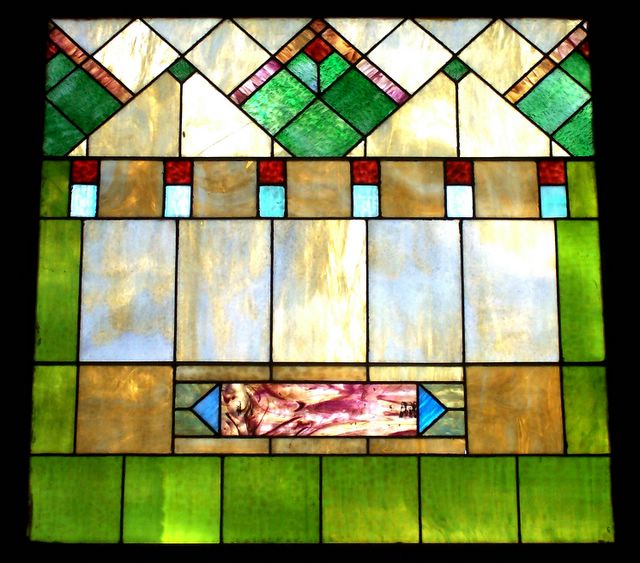

Monday, October 03, 2005

Sunday, October 02, 2005
Oct 2 Sermon, World Communion Sunday
What are some of your first memories of communion? As early as I can remember, I always went to the altar after the service was over and did what I could to finish the bread and grape juice. I would tear off piece by piece and say, “this is the body, broken for me.” “This is the cup of salvation, shed for ME!” I suppose I was a little preacher in training. Sometimes my dad would tell me that I needed to hold off on the bread on particular Sundays so he could take what remained of the loaf to the shut ins. Knowing I’d get my fill, or perhaps just to whet my appetite for my post service feast, it always seemed that my dad would break me off a tiny little snippet of bread. Some of you have commented on the large pieces of bread that I typically break off for you during our communions here, and have politely requested smaller pieces so that you can actually chew them up and swallow it in a timely manner! Well, perhaps now you have a little insight why I blundered on the side of too much instead of too little. I never did stop going up to the altar after the service. In seminary, I was on the worship planning team who was in charge of setting up our Tuesday morning communion services on campus. After the services, I would go up to the altar and get the bread and share it with whatever other brave souls decided to give into the call of their taste buds. If I didn’t have to be at the back greeting you after the service, you can guarantee that I’d be up front here rejoicing in the scraps with our regular plate cleaners.
This past General Conference, the United Methodist Church adopted a survey and study on the theological importance of Communion in our church. In this study, titled “This Holy Mystery,” a survey found that we as United Methodists have a strong sense of the importance of Holy Communion in the life of individual Christians and of the church. Unfortunately, there is at least an equally strong sense of the absence of any meaningful understanding of Eucharistic theology and practice. United Methodists recognize that grace and spiritual power are available to them in the sacrament, but too often they do not feel enabled to receive these gifts and apply them in their lives.
With this in mind, I thought I’d share with you some of what communion means to me. I remember as a kid seeing my mother cry during the celebration of the Lord’s Supper. I was always perplexed about this reaction from my mother. I wasn’t quite sure what it was about eating some bread and drinking some grape juice that could stir my mother to tears. About 10 years down the road though, sitting with the woman who would one day be the mother of my child, I was given an experience of the Eucharist that would clue me in to my mother’s experience. Lara and I had volunteered to be camp counselors at a Jr. High summer camp in the Oklahoma conference, Camp Egan. One night at camp, we planned a communion service for the youth at the outdoor chapel. During the service, amidst the sounds of acustic guitars and illuminated by candlelight, I noticed that the elements looked radiantly perfect. In that tabernacle at Camp Egan, the communion elements stood out to me as a bridge between humanity and God. I had not yet studied the sacramental theology of Jeremy Taylor or the Wesley’s understanding of the Spirit’s involvement with Holy Communion. In fact, I had never put that much thought into the Eucharist. But that night the Light of God was shining forth from the simplicity of the common loaf and cup. I was sitting beside the person I would eventually marry. She was looking down at the floor. I said to her “Lara, look at perfection!” When she lifted her eyes, she saw what I saw, and began to cry. I looked around and noticed the trees and the sounds of night (the chapel was an open tabernacle) and felt the uncanny sense that we were surrounded by all who have participated in this celebration throughout the history of our faith.
A year later, I had an opportunity to take a retreat with Brother Aidan, an Eastern Orthodox hermit monk who painted icons and re-forested the barren hills on the border of England and Wales. When I recounted the experience to him, he exclaimed that I had been involved in the communion of saints. The chapel he built and painted on the grounds of the hermitage conveyed this same theological principle. When I joined him for early morning prayers and readings, I saw that surrounding us on the walls of the chapel were the icons of saints. As we celebrated God’s Word together amidst the regal smell of incense candles and the sound of the language many early Christians spoke, the communion of saints were also present in a tangible way. When I stood in that chapel, I was reminded of sitting in that camp tabernacle in Northeast Oklahoma.
Through my experience at the hermitage, I fell in love with a spiritual world that engaged all the senses. While we Protestants are historically insistent on conveying the “Word” of God with our mouths, Christians throughout history have acknowledged the presence of Christ through the visual communion of the icon, the regal smell of incense, the tender touch of the kiss of a fellow worshipper, or the taste of the Eucharist ingested among the communion of saints who are visually represented on the walls surrounding the celebrants. My experience of Protestantism was enriched by my experience with the Eastern Orthodox Church, which through its worship conveys the deep truth of God found in the Psalms, “O Taste and see that God is good!” (Psalm 34:8).
If you read the September newsletter, you already know a little of the history of what we call “World Communion Sunday.” World Communion Sunday was put into practice first by the Presbyterian church, and then during the 1940’s, it was adopted by hundreds of denominations as an effort to show solidarity and peace to a world that was becoming embroiled in a War that involved the majority of the nations in the world. One thing that strikes me about our particular denominational celebration of Communion is that we give special credence to the idea of a “worldwide communion” because any Christian in the world would be able to take communion at this altar. Our open communion is not even limited to those people who profess to be Christian, but instead we as a denomination extend the invitation to all who seek a closer relationship with Jesus Christ. We do require that participants in the Holy Communion make an earnest confession of their sins before partaking, but this is not a test—instead it is more akin to washing our hands before coming to the table. It is something we do for our own benefit, so that we may feast in fellowship without harboring grudges or guilt or greed. Instead, we come to the table, seeking Christ. If you want to drink of the water that will eternally quench your thirst, you are invited to the table.
In the letter to the Philippeans, we hear Paul’s emphasis on Christ being the central aspect of his own sense of self. Though he places a high value on his own heritage as a Jew, these aspects of his identity pale in comparison to what he has found in the personal relationship with Christ. In the act of communion, we express our belief in the nearness and tangible identity of Christ in our midst. Christ is as near to us and as part of us as this bread and juice that we ingest in the ritual of communion. As the blood of the man Jesus delivered his breath to all the cells of his physical body, in the practice of communion, we believe that his blood continues to bring his Holy Breath or Spirit to us—the cells of his spiritual body. The meal propels us into the present moment. Two thousand years ago is made right now by our remembrance of a simple meal with friends. This observance of sacrament does not promote hollow nostalgia for days when Christ was among us, instead it should tap the reservoir of Christ in the now, and enhance our vision of Christ leading us forward. As Paul says, “forgetting what lies behind and straining forward to what lies ahead, 14I press on toward the goal for the prize of the heavenly call of God in Christ Jesus.”
As we come to the table today with the majority of our Christian brothers and sisters in this world, let us envision Christ in front of us, leading us toward a greater unity that celebrates our diversity. We may celebrate in different ways, but we enact the same meal. We are truly one loaf, and on this day, we all observe the breaking and sharing of that one loaf. I thank God that Jesus gave us a tradition that communicates so clearly, so tangibly to my soul. As we partake in this meal together today, let us give thanks and pray for the restored unity of the church as we struggle to really be the Body of Christ! Amen.
This past General Conference, the United Methodist Church adopted a survey and study on the theological importance of Communion in our church. In this study, titled “This Holy Mystery,” a survey found that we as United Methodists have a strong sense of the importance of Holy Communion in the life of individual Christians and of the church. Unfortunately, there is at least an equally strong sense of the absence of any meaningful understanding of Eucharistic theology and practice. United Methodists recognize that grace and spiritual power are available to them in the sacrament, but too often they do not feel enabled to receive these gifts and apply them in their lives.
With this in mind, I thought I’d share with you some of what communion means to me. I remember as a kid seeing my mother cry during the celebration of the Lord’s Supper. I was always perplexed about this reaction from my mother. I wasn’t quite sure what it was about eating some bread and drinking some grape juice that could stir my mother to tears. About 10 years down the road though, sitting with the woman who would one day be the mother of my child, I was given an experience of the Eucharist that would clue me in to my mother’s experience. Lara and I had volunteered to be camp counselors at a Jr. High summer camp in the Oklahoma conference, Camp Egan. One night at camp, we planned a communion service for the youth at the outdoor chapel. During the service, amidst the sounds of acustic guitars and illuminated by candlelight, I noticed that the elements looked radiantly perfect. In that tabernacle at Camp Egan, the communion elements stood out to me as a bridge between humanity and God. I had not yet studied the sacramental theology of Jeremy Taylor or the Wesley’s understanding of the Spirit’s involvement with Holy Communion. In fact, I had never put that much thought into the Eucharist. But that night the Light of God was shining forth from the simplicity of the common loaf and cup. I was sitting beside the person I would eventually marry. She was looking down at the floor. I said to her “Lara, look at perfection!” When she lifted her eyes, she saw what I saw, and began to cry. I looked around and noticed the trees and the sounds of night (the chapel was an open tabernacle) and felt the uncanny sense that we were surrounded by all who have participated in this celebration throughout the history of our faith.
A year later, I had an opportunity to take a retreat with Brother Aidan, an Eastern Orthodox hermit monk who painted icons and re-forested the barren hills on the border of England and Wales. When I recounted the experience to him, he exclaimed that I had been involved in the communion of saints. The chapel he built and painted on the grounds of the hermitage conveyed this same theological principle. When I joined him for early morning prayers and readings, I saw that surrounding us on the walls of the chapel were the icons of saints. As we celebrated God’s Word together amidst the regal smell of incense candles and the sound of the language many early Christians spoke, the communion of saints were also present in a tangible way. When I stood in that chapel, I was reminded of sitting in that camp tabernacle in Northeast Oklahoma.
Through my experience at the hermitage, I fell in love with a spiritual world that engaged all the senses. While we Protestants are historically insistent on conveying the “Word” of God with our mouths, Christians throughout history have acknowledged the presence of Christ through the visual communion of the icon, the regal smell of incense, the tender touch of the kiss of a fellow worshipper, or the taste of the Eucharist ingested among the communion of saints who are visually represented on the walls surrounding the celebrants. My experience of Protestantism was enriched by my experience with the Eastern Orthodox Church, which through its worship conveys the deep truth of God found in the Psalms, “O Taste and see that God is good!” (Psalm 34:8).
If you read the September newsletter, you already know a little of the history of what we call “World Communion Sunday.” World Communion Sunday was put into practice first by the Presbyterian church, and then during the 1940’s, it was adopted by hundreds of denominations as an effort to show solidarity and peace to a world that was becoming embroiled in a War that involved the majority of the nations in the world. One thing that strikes me about our particular denominational celebration of Communion is that we give special credence to the idea of a “worldwide communion” because any Christian in the world would be able to take communion at this altar. Our open communion is not even limited to those people who profess to be Christian, but instead we as a denomination extend the invitation to all who seek a closer relationship with Jesus Christ. We do require that participants in the Holy Communion make an earnest confession of their sins before partaking, but this is not a test—instead it is more akin to washing our hands before coming to the table. It is something we do for our own benefit, so that we may feast in fellowship without harboring grudges or guilt or greed. Instead, we come to the table, seeking Christ. If you want to drink of the water that will eternally quench your thirst, you are invited to the table.
In the letter to the Philippeans, we hear Paul’s emphasis on Christ being the central aspect of his own sense of self. Though he places a high value on his own heritage as a Jew, these aspects of his identity pale in comparison to what he has found in the personal relationship with Christ. In the act of communion, we express our belief in the nearness and tangible identity of Christ in our midst. Christ is as near to us and as part of us as this bread and juice that we ingest in the ritual of communion. As the blood of the man Jesus delivered his breath to all the cells of his physical body, in the practice of communion, we believe that his blood continues to bring his Holy Breath or Spirit to us—the cells of his spiritual body. The meal propels us into the present moment. Two thousand years ago is made right now by our remembrance of a simple meal with friends. This observance of sacrament does not promote hollow nostalgia for days when Christ was among us, instead it should tap the reservoir of Christ in the now, and enhance our vision of Christ leading us forward. As Paul says, “forgetting what lies behind and straining forward to what lies ahead, 14I press on toward the goal for the prize of the heavenly call of God in Christ Jesus.”
As we come to the table today with the majority of our Christian brothers and sisters in this world, let us envision Christ in front of us, leading us toward a greater unity that celebrates our diversity. We may celebrate in different ways, but we enact the same meal. We are truly one loaf, and on this day, we all observe the breaking and sharing of that one loaf. I thank God that Jesus gave us a tradition that communicates so clearly, so tangibly to my soul. As we partake in this meal together today, let us give thanks and pray for the restored unity of the church as we struggle to really be the Body of Christ! Amen.
Saturday, September 24, 2005
This seems to be the website for the British Methodist Women's group. Has a lot of good resources. You can register for free to access everything. tulsa1
The Magnet
The Magnet
Sunday, September 18, 2005
It's not Fair, Sept. 18 Sermon
We live in a culture that has its roots firmly planted in fairness. You get out what you put in—You reap what you sew. Some attribute the economic success of the United States to the “Protestant Work Ethic.” The idea that we are masters of our own ship that was cultivated by the Puritans who arrived in the 17th century. The liberation of the Bible from the priest and into the hands and languages of the laypeople was a powerful force of the Reformation, and it led to strengthened sense of individuality and personal responsibility. Indeed, many scholars say the Enlightenment itself was planted in the enhanced philosophy of the individual, which was a byproduct of the translation of the Bible into the vernacular. A result of the enlightenment of the 17th and 18th century was the notion of “individual rights” which led to the democratic revolutions. Individual rights as you know sit on a see saw with individual responsibilities. The balance of the two is an agreed upon notion of fairness.
This scripture passage has chafed me since I was a kid. Perhaps it’s that it gnaws at my modern sensibilities of “fairness.” It’s the same thing with the prodigal son’s brother who sticks around and helps out on the farm, or the other sheep who stay in the fold while the shepherd goes off looking for the lost sheep. I don’t remember being an extremely cynical child, but for some reason I always sided with the person who was seemingly wronged in the parable. Those who showed up first and worked all day DESERVED a better pay than those who showed up and worked an hour in the coolness of the evening. Why would the shepherd leave unattended those 99 sheep who had enough sense NOT to go wandering off? The father who rushed out to welcome back his wayward son who showed him no respect and spent all his inheritance in a binge seemed to be revealing an embarrassing degree of FAVORITISM in my book—his other son stuck by him the entire time and he didn’t get a big party?!
Part of me still wonders what kind of time this hypothetical landowner had the next day when he went out into the town square early in the morning and tried to recruit some workers for his vineyard. He likely wouldn’t have any success rounding people up until 5pm if you ask me! Of course, Jesus mentions no “next day” in his parable.
No—Jesus boldly proclaims the beauty of a God who transcends or perhaps simply pre-dates our concept of fairness or “right and wrong.” The landowner who is recruiting help and paying what he wishes inhabits a story where there is no “next day.” Instead, the generosity that he offers, and in turn the unbelievable grace that his generosity points to in our God has no concern for the “next day” when he may or may not be able to get any help. The generosity and grace is ultimately tied to the present moment. It is found in every breath we take and has no concern for our past or our future. IT is given to us because it is a product of God’s eternal nature.
Jesus continuously reminds us that we are given grace not according to our faithfulness, but according to God’s ever abundant generosity. Though it may offend my sense of right and wrong, Jesus tells us that God’s generosity extends beyond the boundaries of fairness. Is this a welcome word? Is this Good News? It isn’t if we consider Fairness to be God’s chief virtue. Here’s a thought—perhaps our cultural picture of a God who judges us eternally based on the life we lived, or who rewards hard work and lasting faithfulness with all the bounty we can comprehend is simply a byproduct of our fairly young and fairly immature culture. The Gospel lesson tells us of a God who is radically UNFAIR—Our God might be accused of being naïve by our worldly standards. The indiscriminating outpouring of grace and love toward all who come with open hands is a beautiful picture—but we would probably call someone who enacted this kind of ethical standard in our day and age an idealist.
Perhaps my problem with this story and the others is my own haughty assumption that I can even identify with the early workers. My concentration on the “fairness” of the passage probably means that I, consciously or not, believe that I am an “early worker” when the reality is that I’m probably showing up at around 4:55 to the market square to look for work. While I may be more prone to grumbling about fairness, I should actually be rejoicing at the undeserved grace I’ve been given.
Perhaps the reality is that we’re all showing up late to put in an hour’s work. In the cultural context in which this Gospel lesson was written, Gentiles would probably have taken comfort to know that even those who had shown up late to the game were given the same reward as those who had been part of the project for so long. The God of Christianity was and is the God of the Hebrews. There was competition between Jewish adherents of Jesus and Gentile adherents of Jesus. In a way, this parable spoke to the early church in a way that still speaks to us today. Those Gentiles who were new to the faith, and thus “late comers” to the vineyard, were given the same reward as those who had practiced the faith of the fathers for their whole life. Matthew gives his auidience a fresh vision of the radical inclusiveness of this God we worship. We aren’t rewarded for how long we’ve believed: There are no company watches given in God’s Kingdom—we are rewarded by God’s grace. God’s grace can’t be quantified into a little grace for you and a much larger portion of grace for you. God’s grace is immeasurable and infinite in every circumstance it is given. We are all recipients of this grace—if we must think in terms of “equal measure” then the story tells us it is an equal measure. But the truth is that it is quantified and multiplied by what we do with it. Jesus also tells the story of the talents, where a landowner gives talents to each of his slaves, and they bring glory to their master based on what they DO with those talents. If we share the grace we are given with others, we multiply that grace in the world, and our master is glorified because of it.
We have such a bad habit of drawing lines around ourselves and between ourselves. There are those of us who are old Christians and new Christians, there are those of us who have “gotten what was coming to us” and there are those of us who are living “charmed lives.” There are insiders and outsiders, latecomers and early risers. Our cultural norms reinforce these lines of distinction and convince us to act in accordance with their rules and laws. But we have a God who refuses to pay attention to such things. God extends grace to every living soul on the face of the earth. There is no contract to sign, there are no hours to put in, there is nothing on this earth that can squeeze out more or less grace than what is being offered us when we draw our first breath. God loves us all to our cores at that moment. We are loved as much at our first moment, without doing a thing about it, as we are loved at our last moment, with a life of service to God behind us. God loves you and me as much as He loves his greatest servants, like Mother Theresa, Martin Luther King, or John Wesley. God loves you and me as much as he loves our greatest enemies, or those people we believe don’t deserve God’s grace. The story of the generous landowner tells us that God’s love is radically and eternally present and pouring over each of our lives. The story of the talents gives us a deeper perspective in that we realize that we must open our hands and receive God’s outpouring of love. We must be filled and in turn spill over with God’s redeeming love. If we are given God’s grace and talents and then bury them in our hearts for only our consolation and hope, then we are like the workers who bury their talents in the ground, waiting for the master’s return.
If we delight in the grace given us at the end of the day instead of grumbling about God’s generosity—if we take our “earnings” and share them with our neighbors, God’s grace will multiply in the world through us. We will become conduits of God’s grace! Thanks be to God! Amen
This scripture passage has chafed me since I was a kid. Perhaps it’s that it gnaws at my modern sensibilities of “fairness.” It’s the same thing with the prodigal son’s brother who sticks around and helps out on the farm, or the other sheep who stay in the fold while the shepherd goes off looking for the lost sheep. I don’t remember being an extremely cynical child, but for some reason I always sided with the person who was seemingly wronged in the parable. Those who showed up first and worked all day DESERVED a better pay than those who showed up and worked an hour in the coolness of the evening. Why would the shepherd leave unattended those 99 sheep who had enough sense NOT to go wandering off? The father who rushed out to welcome back his wayward son who showed him no respect and spent all his inheritance in a binge seemed to be revealing an embarrassing degree of FAVORITISM in my book—his other son stuck by him the entire time and he didn’t get a big party?!
Part of me still wonders what kind of time this hypothetical landowner had the next day when he went out into the town square early in the morning and tried to recruit some workers for his vineyard. He likely wouldn’t have any success rounding people up until 5pm if you ask me! Of course, Jesus mentions no “next day” in his parable.
No—Jesus boldly proclaims the beauty of a God who transcends or perhaps simply pre-dates our concept of fairness or “right and wrong.” The landowner who is recruiting help and paying what he wishes inhabits a story where there is no “next day.” Instead, the generosity that he offers, and in turn the unbelievable grace that his generosity points to in our God has no concern for the “next day” when he may or may not be able to get any help. The generosity and grace is ultimately tied to the present moment. It is found in every breath we take and has no concern for our past or our future. IT is given to us because it is a product of God’s eternal nature.
Jesus continuously reminds us that we are given grace not according to our faithfulness, but according to God’s ever abundant generosity. Though it may offend my sense of right and wrong, Jesus tells us that God’s generosity extends beyond the boundaries of fairness. Is this a welcome word? Is this Good News? It isn’t if we consider Fairness to be God’s chief virtue. Here’s a thought—perhaps our cultural picture of a God who judges us eternally based on the life we lived, or who rewards hard work and lasting faithfulness with all the bounty we can comprehend is simply a byproduct of our fairly young and fairly immature culture. The Gospel lesson tells us of a God who is radically UNFAIR—Our God might be accused of being naïve by our worldly standards. The indiscriminating outpouring of grace and love toward all who come with open hands is a beautiful picture—but we would probably call someone who enacted this kind of ethical standard in our day and age an idealist.
Perhaps my problem with this story and the others is my own haughty assumption that I can even identify with the early workers. My concentration on the “fairness” of the passage probably means that I, consciously or not, believe that I am an “early worker” when the reality is that I’m probably showing up at around 4:55 to the market square to look for work. While I may be more prone to grumbling about fairness, I should actually be rejoicing at the undeserved grace I’ve been given.
Perhaps the reality is that we’re all showing up late to put in an hour’s work. In the cultural context in which this Gospel lesson was written, Gentiles would probably have taken comfort to know that even those who had shown up late to the game were given the same reward as those who had been part of the project for so long. The God of Christianity was and is the God of the Hebrews. There was competition between Jewish adherents of Jesus and Gentile adherents of Jesus. In a way, this parable spoke to the early church in a way that still speaks to us today. Those Gentiles who were new to the faith, and thus “late comers” to the vineyard, were given the same reward as those who had practiced the faith of the fathers for their whole life. Matthew gives his auidience a fresh vision of the radical inclusiveness of this God we worship. We aren’t rewarded for how long we’ve believed: There are no company watches given in God’s Kingdom—we are rewarded by God’s grace. God’s grace can’t be quantified into a little grace for you and a much larger portion of grace for you. God’s grace is immeasurable and infinite in every circumstance it is given. We are all recipients of this grace—if we must think in terms of “equal measure” then the story tells us it is an equal measure. But the truth is that it is quantified and multiplied by what we do with it. Jesus also tells the story of the talents, where a landowner gives talents to each of his slaves, and they bring glory to their master based on what they DO with those talents. If we share the grace we are given with others, we multiply that grace in the world, and our master is glorified because of it.
We have such a bad habit of drawing lines around ourselves and between ourselves. There are those of us who are old Christians and new Christians, there are those of us who have “gotten what was coming to us” and there are those of us who are living “charmed lives.” There are insiders and outsiders, latecomers and early risers. Our cultural norms reinforce these lines of distinction and convince us to act in accordance with their rules and laws. But we have a God who refuses to pay attention to such things. God extends grace to every living soul on the face of the earth. There is no contract to sign, there are no hours to put in, there is nothing on this earth that can squeeze out more or less grace than what is being offered us when we draw our first breath. God loves us all to our cores at that moment. We are loved as much at our first moment, without doing a thing about it, as we are loved at our last moment, with a life of service to God behind us. God loves you and me as much as He loves his greatest servants, like Mother Theresa, Martin Luther King, or John Wesley. God loves you and me as much as he loves our greatest enemies, or those people we believe don’t deserve God’s grace. The story of the generous landowner tells us that God’s love is radically and eternally present and pouring over each of our lives. The story of the talents gives us a deeper perspective in that we realize that we must open our hands and receive God’s outpouring of love. We must be filled and in turn spill over with God’s redeeming love. If we are given God’s grace and talents and then bury them in our hearts for only our consolation and hope, then we are like the workers who bury their talents in the ground, waiting for the master’s return.
If we delight in the grace given us at the end of the day instead of grumbling about God’s generosity—if we take our “earnings” and share them with our neighbors, God’s grace will multiply in the world through us. We will become conduits of God’s grace! Thanks be to God! Amen
Subscribe to:
Posts (Atom)

 Posts
Posts


