Tuesday, March 21, 2006


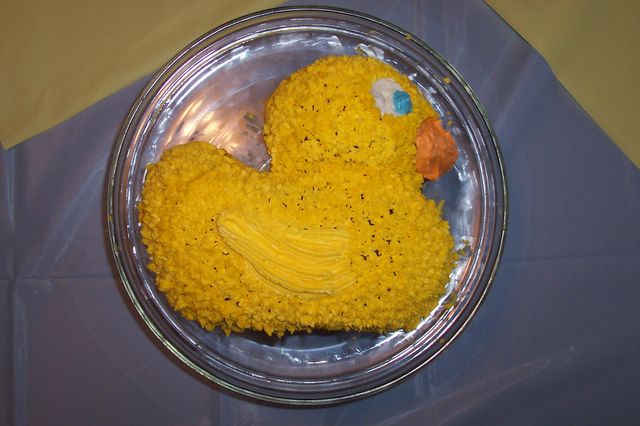
Rubber duckie, you're the one.

yum

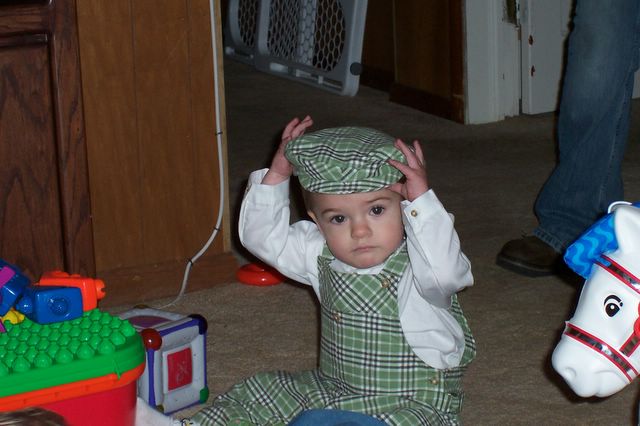
Birthday cake boy, with moms and pops

St. Patty's day birthday boy. Surrounded by his weight in toys

A very hard thing to do

I told my congregation on Sunday that Lara and I would be moving this coming June. We're really excited about our move, and sad at the same time because we're leaving beautiful people.
For all you preacher's out there--it is muy dificil. i remember standing there speaking and feeling like I was outside myself. I literally saw myself from behind nad heard myself talking, and being like "Okay, you've said enough, sit down and get to the worship service, that's why people are here."
Very surreal experience.
If you want to read the feeble words I was able to compose for that Sunday, go the church blog
peace

Tuesday, March 14, 2006


My happy little boyoyoyoyoy!

Wednesday, February 22, 2006

Finally, someone said it!

"[T]he main objective of my writing today, is to nail the lie that to reject Zionism as it is practised today is in effect to be anti-Semitic, to be an inheritor of Hitler's racism. That argument, with the Holocaust in the background, is nothing other than moral blackmail. It is highly effective. It condemns many to silence who fear to be thought anti-Semitic. They are often the very opposite. They are often people whose heart bleeds at Israel's betrayal of its true heritage."


- Paul Oestreicher, chaplain at the University of Sussex, former member of the Church of England's general synod, and director of the Centre for International Reconciliation.


Oestreicher describes his heritage: "I say this as the child of a German Jewish-born father who escaped in time. His mother did not. I say it as a half-Jewish German child chased around a British playground in the second world war and taunted with 'he's not just a German, he's a Jew.' A double insult. But I say this too as a Christian priest who shares the historic guilt of all the churches. All Christians share a bloody inheritance."

Friday, February 17, 2006

Procrastinate? I don't think twice, Cause I'm livin' in a map geek's paradise.


Google Earth. My new procrastinating tool of choice. It is so cool. Zoom in on real photos of your car parked in front of your house from space.

Tuesday, February 14, 2006

I'm spying on you!

I've got a new page counter. Now I can see how big a loser I am.

Wednesday, January 18, 2006

Funeral Sermon for a Home-Maker

Scripture is the Gospel Lesson from the UM Book of Worship Service of Death and Resurrection:
John 14: 1-4, 18-19, 25-27

From speaking with members of this family and the friends of Pat, I’ve gathered that this woman whose life, death, and resurrection we celebrate today took great pride in being a mother, a wife, a cook. She was a home – maker. What a tremendous profession that is! To make a home, to be the one that turns four walls and a roof into a place where “family” happens….this is indeed a great gift and one that Pat had great expertise in sharing with the world. It is a testimony to her great ability with “making a home” that her children are here today, and that though separated by many miles they seem to have the ability to “pick right up where they left off.”
Pat’s life as one who took great pride in “home-making” is also a witness to this beautiful, powerful, “Living” God who makes a home in us. We celebrate a God who gives us life by breathing into our very bodies the “Breath of Life” as is said in our Creation Story. This Holy Breath or Holy Spirit makes our bodies into temples, and if we live our life empowered and motivated by this Power, we’re made into “members of the One Body—the Living Body of the one who revealed God’s love and mercy in a unique way on Earth—the Body of the Living Christ.” This man called Jesus was also a “home-maker” without a place to “lay his head.” This wandering Rabbi taught his followers how to make a home in their hearts for the Living Loving Lord whom he knew as Abba—or Daddy. This man named Jesus taught us to make a home in our midst for reconciliation, renewal, refreshment, and renouncing our lives of self-centeredness. This man called Jesus also assured us that he was going ahead of us into Death and was going to make a road through Death to prepare a home for us beyond death. Just in case we were worried about making the trip there on our own, Christ promises us to return again and take us there himself. Do not worry, he says, I will not leave you here orphaned. Christ indeed does not leave us orphaned. The Living Christ makes a home here among us, “where two or three are gathered,” and with us shares our loss, our heartache, our joy, and our celebration.
We gather today to celebrate the home that Pat made for her family, we gather today to celebrate the God who makes a home in our midst and who now draws Pat into her eternal heavenly home. God is a home-maker for us in this life and in the next. God is trying to burst through our barriers and walls to make a home for us in this life. Pat believed in a man named Jesus who brought that vision to Earth in a unique way. After pass through the doorway of death, we enter the home that God prepares for us in the mysterious life to come. This is the home that God is attempting to utilize us to create on Earth. This is the home that Jesus calls us to in this life and after this life. In our gospel passage, Jesus comforts us with the knowledge that Jesus prepares a place for us there, and there are many rooms—room for everyone!

Wednesday, December 28, 2005

Great Epiphany sermon

http://www.day1.net/index.php5?view=transcripts&tid=467

Monday, December 26, 2005

My sentiments exactly

This recent article by Newsweek's Anna Quindlen really sums up my thoughts on the whole idiot wind effort on the part of some Christians to boycott some stores for not using the words Merry Christmas instead of Happy Holidays. I guess we'll start yapping about any old thing that will take the focus off of Christians coming to terms with the confronting reality of a vibrant faith. Christian Peacemaker Team is still missing in Baghdad while giving themselves as a sacrifice to the ideal of non-violent resistance which was inspired by some of our faith's greats (including the original), and instead of rallying around what they have brought to the world stage, American Christians get caught up in a bunch of bull-shit. When will we wake up and take the mantle?

Tuesday, December 20, 2005

"Birth of the Light" Christmas Sermon

Over the past weeks of the Advent season, we have looked into the faces of the cherished figures of the Nativity. During the first week, amidst the celebration of the Hanging of the Greens, the Angels were our focus. We asked ourselves what kind of signs we might be given by the angels we might knowingly or more likely unknowingly encounter in our own lives. The next week, we focused on the role that the shepherds and livestock played in our great story, and how they were open to God’s announcement of incarnation because of their willingness to “keep watch” and “listen.” Then we focused on Joseph, the silent guardian of God as a baby. We looked at his great witness to follow God’s promptings and the miracle of his belief and faith in the message brought to him by the angel. Last week we reflected on Mary’s Song of Magnification of the works of God. And today we turn our attention to the manger. That centerpiece to the nativity story—and what it holds: The center of the whole world.
John’s prologue is revered by many as the most beautiful words of the entire Bible. It tells the story of our Christ in a unique way in the Bible. Whereas Matthew and Luke tell the story of Jesus’ humble beginnings in the manger, and Mark’s hurried gospel doesn’t even reflect on the Christ’s origins, John’s Gospel tells that Christ as the Eternal Logos or Word was with God and Part of God before the Creation of the world.
It is from John that we learn that this man traveled around the lakes and mountains and cities of Palestine 2000 years ago was no ordinary man, but instead the “Word in Flesh.” It tells that how everything was created through the Word, and that therefore all creation was known by him and all creation has a connection to him. God creates by speaking, and the Word is the manifestation of that aspect of God.
We also learn that this creative Word is Light—as Isaiah says, the “people who have walked in the darkness have seen a great light” Isaiah goes on to talk about a child who will one day be born who will bear this light, and John identifies this light as the person whose birth we celebrate this day.
Last night as I read this scripture as our last lesson to the lessons and carols service, we enacted the scripture as it was read. We began in darkness, as we heard about the Word being in the beginning with God and nothing else. This was before the creation of anything, including light and darkness. And then I lit the Christ candle as we heard about the Word’s life being the light of all people. As the light went around the room and illuminated the faces of everyone present, I read the words that contain the whole Gospel in two sentences, “But to all who received him, who believed in his name, he gave power to become children of God, 13who were born, not of blood or of the will of the flesh or of the will of man, but of God. 14And the Word became flesh and lived among us, and we have seen his glory, the glory as of a father’s only son, full of grace and truth.”
I enacted this part of the service last night because I wanted us to hear it and understand it as being true and present in this moment with us. John doesn’t tell the story of something that happened a long time ago and is merely an occurence of the past—John writes about a light that shines in darkness. The darkness of time or place does not overcome the light that continues to shine.
This is the amazing thing about the Gospel. WE have walked in the darkness. We come from all walks of life. Some of us are old, some of us are young, some of us are hometown people, some of us are transplants from another place, some of us are rich, some of us are poor, some of us have loved, some of us have loved and lost. Here’s what we all have in common—we have all walked in the darkness. Though it would seem that some of us have sinned in greater frequency or greater magnitude than others, we have all been born with something missing in our lives, a “God shaped hole in our hearts” as some people call it. Isaiah and John calls it darkness.
But the good news is this, we have seen a great light, and furthermore, that Light comes to us to receive. Graciously, the Light has come toward us and continues to come toward us. As long as we reject the great filling light in our presence, we will continue to walk in darkness. As long as we refuse to forgive and love and share and make peace, that “God shaped hole” will continue to be a God shaped hole. Why? Because God loves us so much that God gave us freedom. The light is not invasive. It is persuasive, like a friend holding a candle toward you for you to light your candle on.
And if we do light our candle with the Light of God, IF we do allow our soul to be ignited with the awesome power of love and forgiveness and peace and sharing, our faces will become illuminated in the presence of the Living Christ. We will finally see ourselves and our neighbors as Children of God. This is the message that the Living Word would have us understand. After all of creation was spoken into being through the creative power of the Word and Breath in Genesis 1, there is a pronouncement that is as creative and life giving as our identity: God is happy with God’s creation and exclaims, “It is good!”
Yes, we are children of God from the very beginning, but we enslave ourselves to lesser parents. We walk in darkness and we look to other sources for parental comfort, don’t we? We make ourselves “Children of Exclusiveness” or “Children of Posessions” or “Children of Beauty” or “Children of Hollow Happiness.” Jesus says later in John’s gospel that “this is the judgment of the world, that the light has come into the world, and people loved darkness rather than light.” Why do we love the darkness rather than the light?
Because the light comes to earth in a feeding trough…The Light takes a cross on his back and asks us to as well. The Light asks us to change our direction in life. We fill the God shaped hole with other things, and we think we are full until the little cracks appear in our carefully tailored lives. God’s light continues to shine in our direction though, and it continues to come to us. All we have to do is dip our candle toward the one being offered to us. All we must do is dip our heads down and ask for forgiveness. All we must do is forgive others as God forgives us.
When we take on the light, our burdens are taken on by that little child laying in a manger. He is willing and able to carry our load. As things become lighter in our lives, we may even find ourselves sharing the light with others. We may turn to the person next to us and offer the Light of Christ to them.
In so doing, the brightness grows! God’s Kingdom is made manifest on earth, and more faces glow with the good news of the Word and Light. Just as we saw last night, the Light comes in the flesh because the Living Christ is alive in our flesh. The very enactment of the Christmas story in our midst is shown in Our faces glowing in the candlelight as we sing hymns declaring the wonder and mystery of God’s humble birth. The Light becomes brighter through our sharing, and more people in the shadows are able to see it. But for us to share the Light and be the Living Christ, we must walk toward the shadows. This is what Christ exhibited in a life in which he was reprimanded by the “holy men” for going into the houses of tax collectors and prostitutes.
This birth that we celebrate today is not just a birth in a stable 2000 years ago, it is a birth waiting to happen. Every moment holds the potential for this birth because this birth is the birth of the Light in the world of darkness. The darkness cannot overcome it, and as long as we hold the candle of our faith in front of us, guiding us, we cannot be overcome. Even in dying, the martyrs of our faith were able to shed light on the darkness. As we gather to share this sacred meal together, let us imagine ourselves receiving the light just as we did last night with candles. We take this meal for the same purpose—to bring more fuel for the fire, to help the light shine brighter through our participation in the Living Christ through the power of the Holy Spirit. The Light of God wants to enlighten your life because God wants you to know who you really are—a shining faced Child of God! Amen.

Thursday, November 17, 2005

Prayer Answered

Lately I have felt a little down, a little uninspired. It’s hard sometimes being the pastor of a church and coming up with some words of inspiration every Sunday. On Tuesday night, I had just wrestled with my son trying to get his diaper and PJs on, and I was sitting there holding him. I asked my Wesley, “You’re such an inspiration to me, but I need God to show me something that will inspire me to write a good sermon this week. I need God to give me a little something, letting me know that I am indeed called to be doing what I am doing.” Questions raised at charge conference about my salary have gotten me feeling defensive about my worth to this community. What is it that I do for them exactly? I don’t render any service but my presence in times of need. I don’t produce any product except for some words on Sunday, hopefully helping people deepen their relationship with God.
I took these questions with me outside to smoke my pipe in what had turned out to be a cold night. I lit my pipe and stood there focused on the shed in my back yard. As I was standing there, it suddenly grew brighter. The trees cast shadows on the grass. I looked up in the sky and saw a full moon. The low hanging clouds were moving rather quickly across the sky, and as they passed, the moon would peek out from behind them and illuminate my whole yard. The radiance of the moon lit up the contours of each cloud moving across the dark sky. I felt like I was on the bottom of the ocean looking up at silver gilded hulls of great ships, moving in from the north. From time to time, Mars or Jupiter would also peek through a small break in the clouds, framing the planet momentarily. It looked surreal, like a photo negative. As the moon drew my yard out of darkness and cast shadows of the fence and trees, the moment also drew my mind out of the darkness of self-doubt and worry. I went inside to get Lara, and she had just finished putting Wesley down for the night. I asked her to get a coat and come out with me. She was thrilled by the sight as well, and pointed out that the moon was so bright that as the clouds grew thinner at the edges, you could see the water vapors in little wispy rainbows. Rainbows at night! Symbols of God’s promise that aren’t restrained to the light of day. Even on a cold dark night, the moon reflects the piercing light of the sun to the extent that it can broken into colors by the prism of water vapor. What a miracle! I was overcome with joy, and took it as an answer to my prayer.

Sunday, October 09, 2005

Oct 9 Sermon, Prop. 21?

Sometimes the Good News sounds fine and dandy until Jesus tweaks the story just a little bit. We have come to expect the Kingdom of God to include the last and the least. This is a familiar refrain in the stories of Jesus. It makes us feel really good about ourselves since we have claimed the invitation, and are on the inside. Today’s lesson follows the general rule to Kingdom parables. That is, until the end—when we perk our ears up and wonder if we had accidently fallen asleep and made up the ending. Luckily, I read this scripture earlier in the week before I had my oral surgery, and therefore did not attribute the odd behavior exhibited in this scripture to my pain medication.
The King sends out the messengers to tell of the wedding banquet for his son. If we interpret the story as Matthew’s followers probably did, we hear in the symbols the familiar setup. God is the King, and the Good News of Christ is the Banquet for his son. The messengers are the prophets who have been sent by God to his people—to spread the news of the coming of Christ. The people refuse, and so the King, feeling somewhat rebuffed, sends out the messengers again, in order that they have sufficient notice of the announcement. This time they kill the messenger/prophets, which is a common accusation of Jesus against the people of Israel, especially in Matthew. Think for instance of Matthew 23: 37, where upon arriving at Jerusalem for the first time in his ministry, Jesus utters the famous phrase, “"Jerusalem, Jerusalem, the city that kills the prophets and stones those who are sent to it! How often have I desired to gather your children together as a hen gathers her brood under her wings, and you were not willing!”
Matthew was writing his gospel in the midst of the downfall of Jerusalem and the destruction of the Temple by the Romans in 70AD, and he believed this was a punishment for the people of Jerusalem’s unbelief. This aspect of the story is different from the perhaps more familiar version of the story in Luke 14:15-24 where the King is simply rebuffed by the townspeople and therefore sends invitations to the people in the highways and the hedges.
Also unique to Matthew’s version of this parable is the King’s response to the wedding guest who is not properly dressed. This being so unique, it caught my eye and became the focus of my preparations for today’s sermon.
Why in the world would Jesus tell us that God cares about what clothes we show up to the banquet in? Doesn’t Jesus usually tell us that God accepts us no matter who we are or what kind of mess we usually show up to the banquet of his Grace in? Doesn’t this seem to chafe against our common understanding of the Gospel? What could this possibly symbolize, that could justify the King telling his servants to “bind this man hand and foot, and cast him into the outer darkness, where there is weeping and gnashing of teeth?” Matthew clearly thinks there is something more to the Christian life than just “showing up” to the invitation. Contrary to the Jesus of our popular conceptualization, Matthew tells of him reporting that “many are called, but few are chosen.”
So what do we do with this text? Do we move it over to the category of scriptures that may have had some use at some point, but clearly don’t belong in our repertoire of favorite scriptures for “making disciples.” After all, how many “Matthew 22:14” posters have you seen at football games. Perhaps this scripture just belongs with the Psalms about bashing babies’ heads against the rocks, or the Levitical laws about selling your son or daughter into slavery for misbehaving. Or perhaps we should try and parse out what it may be saying to us behind all the rough veneer.
Perhaps instead of always focusing on why we are accepted to the party, we should pay attention to what kind of attire we are wearing.
The Bible speaks quite frequently about clothing. In the Genesis story, we are told that God made “garments out of skin” for Adam and Eve after they ate of the fruit of the tree of knowledge of good and evil. Joseph draws the jealous rage of his brothers for wearing the “many colored coat” that his father gave him. Jesus is said to have worn a seamless robe that the soldiers gambled for at the foot of his cross. A woman was also healed by touching his garment.
So what about these wedding robes that seem so important to the host of the banquet? In this story, the “wedding robe” is a symbol of something. Isaiah 61:10 tells us about “garments of salvation, and robes of righteousness.” In 1st Thessalonians, Paul tells us to put on the breastplate of faith and love, and the helmet of hope and salvation. What is it that a wedding robe symbolizes anyway? This is a symbol that has been somewhat lost to us because we no longer observe the practice of wedding robes. A wedding robe was given by the host to all who attended the banquet in order to “level the playing field.” Weddings weren’t an opportunity for the wealthy guests to show off their wealth and the poor guests to feel bad about their shabby attire. The host of the wedding provided beautiful robes so that everyone in attendance would be focused on the joy of the festivities instead of who had what. Viewed through this lens, the person who took off his wedding robe is trying to draw attention to himself. He is accepting the generosity of the host, but he is trying to do so on his own terms.
I believe today’s epistle lesson fits quite nicely with today’s Gospel lesson. Paul repeats over and over again in his letter to Phillipi to “Rejoice in the Lord, Always.” As I’ve mentioned before, this is Paul’s happiest letter, and it is written from a prison cell. Paul has tapped into the well of Christ in a way that he is now overflowing with the peace and love. He declares that this joyful exuberance surpasses all understanding, yet it guards our hearts and minds.
At the beginning of today’s reading, he pleads with two women, Euodia and Syntyche, to put their disagreement behind them and “be of the same mind.” Perhaps Paul is familiar with the “wrong attire” and is assuring his fellow banquet guests of the proper attire. Perhaps we can also hear Paul beckoning us toward the life of the light today. Perhaps when we let grudges over hurt feelings or petty jealousies stand in the way of joyful fellowship, we are wearing the wrong attire for God’s banquet! Perhaps when we allow our disagreements about the particularities to blind us to the larger truth of God’s grace, we are wearing the wrong attire to God’s banquet! Perhaps when we infect our church family with spite against someone we have a personal disagreement with, we are wearing the wrong attire to God’s banquet!
Christian friends: showing up to the banquet with an invitation in hand is a wonderful first step to accepting God’s grace. We as Wesleyans however, believe that grace continues to grow and bloom and bear fruit in our lives through the miracle of “sanctifying grace.” This is the art of living lives of personal and social holiness to be a joyful witness to the world about God’s grace and salvation. It is basically “donning our wedding robes” for the entire banquet, not taking them off after we’ve made it through the door. The idea that “many are called, but few are chosen” is Jesus’ way of telling us that the work of salvation continues in our life even after we’ve accepted the invitation. In case you haven’t done so yet, I will once again remind you to take a copy of the Book of Discipline’s paragraphs on church membership.
Church membership means we are accountable to one another, and we have the privilege to be so. It is about choosing a life of reconciliation and love over gossip and grudge matches. Sisters and brothers, I will tell you as Paul told the church at Philippi, if there are two of you who are harboring feelings against each other, please put away your ill feelings for the sake of the Gospel! Paul tells us to “be of the same mind.” This mind is the mind of Christ, and Paul assures us that “we can do all things through Christ who gives us strength.”
Did you know that in the early church, when converts to the faith were being baptized, they removed all their clothing and went down into the water, then after being baptized in the name of the Trinity, they walked up out of the baptismal chamber, stomped on their old clothing, and were given new bright white robes? The act symbolized shedding the constraints of this world and even participating in the death of Christ. The waters were entered naked to symbolize our rebirth into the Kingdom Life. The new white clothing clebrated the purity of Christ that Christians were then privileged to put on and wear with joy and righteousness. New Christians stomped on their old clothing as a symbol of rejecting the sin they had left behind on the other side of the baptismal waters.
We are invited to a great feast - a wedding feast. Let us not make light of the invitation and refuse to come. We are not required to provide our own gowns and tuxedos. It is not up to us to fashion our own garments. Instead, we are to look to God, who saw to the needs of Adam and Eve, who covered their shame and made them to shine like the sun. We have a tailor of awesome reputation, one who, quite literally, fashions the stars and clothes the lilies of the field. In giving us Christ Jesus, God fashions for us a garment of great praise, a robe of eternal worth. We ought not be so proud as to insist on clothing ourselves, but rather humble our hearts, put on love, and clothe ourselves with Christ!

Wednesday, October 05, 2005


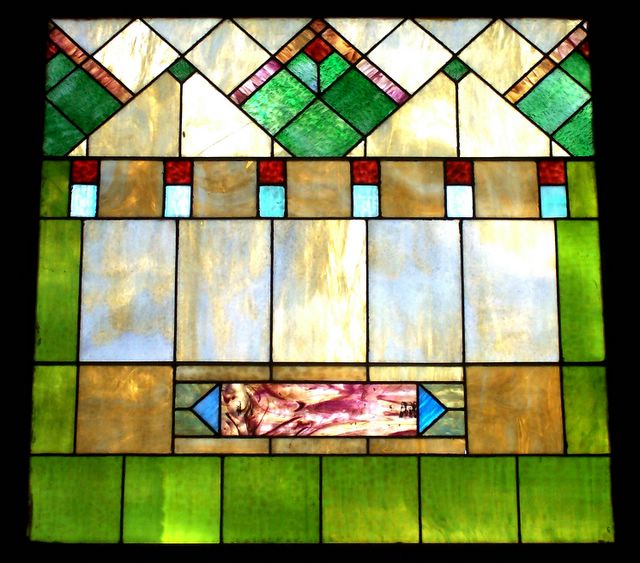
stained glass window at my church. I wish I had time to write a nice, venting blog. Posted by Picasa

Monday, October 03, 2005


Here's a photo I'm proud of. I like to think it illuminates well the interconnectedness of all things.  Posted by Picasa

Sunday, October 02, 2005

Oct 2 Sermon, World Communion Sunday

What are some of your first memories of communion? As early as I can remember, I always went to the altar after the service was over and did what I could to finish the bread and grape juice. I would tear off piece by piece and say, “this is the body, broken for me.” “This is the cup of salvation, shed for ME!” I suppose I was a little preacher in training. Sometimes my dad would tell me that I needed to hold off on the bread on particular Sundays so he could take what remained of the loaf to the shut ins. Knowing I’d get my fill, or perhaps just to whet my appetite for my post service feast, it always seemed that my dad would break me off a tiny little snippet of bread. Some of you have commented on the large pieces of bread that I typically break off for you during our communions here, and have politely requested smaller pieces so that you can actually chew them up and swallow it in a timely manner! Well, perhaps now you have a little insight why I blundered on the side of too much instead of too little. I never did stop going up to the altar after the service. In seminary, I was on the worship planning team who was in charge of setting up our Tuesday morning communion services on campus. After the services, I would go up to the altar and get the bread and share it with whatever other brave souls decided to give into the call of their taste buds. If I didn’t have to be at the back greeting you after the service, you can guarantee that I’d be up front here rejoicing in the scraps with our regular plate cleaners.

This past General Conference, the United Methodist Church adopted a survey and study on the theological importance of Communion in our church. In this study, titled “This Holy Mystery,” a survey found that we as United Methodists have a strong sense of the importance of Holy Communion in the life of individual Christians and of the church. Unfortunately, there is at least an equally strong sense of the absence of any meaningful understanding of Eucharistic theology and practice. United Methodists recognize that grace and spiritual power are available to them in the sacrament, but too often they do not feel enabled to receive these gifts and apply them in their lives.

With this in mind, I thought I’d share with you some of what communion means to me. I remember as a kid seeing my mother cry during the celebration of the Lord’s Supper. I was always perplexed about this reaction from my mother. I wasn’t quite sure what it was about eating some bread and drinking some grape juice that could stir my mother to tears. About 10 years down the road though, sitting with the woman who would one day be the mother of my child, I was given an experience of the Eucharist that would clue me in to my mother’s experience. Lara and I had volunteered to be camp counselors at a Jr. High summer camp in the Oklahoma conference, Camp Egan. One night at camp, we planned a communion service for the youth at the outdoor chapel. During the service, amidst the sounds of acustic guitars and illuminated by candlelight, I noticed that the elements looked radiantly perfect. In that tabernacle at Camp Egan, the communion elements stood out to me as a bridge between humanity and God. I had not yet studied the sacramental theology of Jeremy Taylor or the Wesley’s understanding of the Spirit’s involvement with Holy Communion. In fact, I had never put that much thought into the Eucharist. But that night the Light of God was shining forth from the simplicity of the common loaf and cup. I was sitting beside the person I would eventually marry. She was looking down at the floor. I said to her “Lara, look at perfection!” When she lifted her eyes, she saw what I saw, and began to cry. I looked around and noticed the trees and the sounds of night (the chapel was an open tabernacle) and felt the uncanny sense that we were surrounded by all who have participated in this celebration throughout the history of our faith.
A year later, I had an opportunity to take a retreat with Brother Aidan, an Eastern Orthodox hermit monk who painted icons and re-forested the barren hills on the border of England and Wales. When I recounted the experience to him, he exclaimed that I had been involved in the communion of saints. The chapel he built and painted on the grounds of the hermitage conveyed this same theological principle. When I joined him for early morning prayers and readings, I saw that surrounding us on the walls of the chapel were the icons of saints. As we celebrated God’s Word together amidst the regal smell of incense candles and the sound of the language many early Christians spoke, the communion of saints were also present in a tangible way. When I stood in that chapel, I was reminded of sitting in that camp tabernacle in Northeast Oklahoma.
Through my experience at the hermitage, I fell in love with a spiritual world that engaged all the senses. While we Protestants are historically insistent on conveying the “Word” of God with our mouths, Christians throughout history have acknowledged the presence of Christ through the visual communion of the icon, the regal smell of incense, the tender touch of the kiss of a fellow worshipper, or the taste of the Eucharist ingested among the communion of saints who are visually represented on the walls surrounding the celebrants. My experience of Protestantism was enriched by my experience with the Eastern Orthodox Church, which through its worship conveys the deep truth of God found in the Psalms, “O Taste and see that God is good!” (Psalm 34:8).

If you read the September newsletter, you already know a little of the history of what we call “World Communion Sunday.” World Communion Sunday was put into practice first by the Presbyterian church, and then during the 1940’s, it was adopted by hundreds of denominations as an effort to show solidarity and peace to a world that was becoming embroiled in a War that involved the majority of the nations in the world. One thing that strikes me about our particular denominational celebration of Communion is that we give special credence to the idea of a “worldwide communion” because any Christian in the world would be able to take communion at this altar. Our open communion is not even limited to those people who profess to be Christian, but instead we as a denomination extend the invitation to all who seek a closer relationship with Jesus Christ. We do require that participants in the Holy Communion make an earnest confession of their sins before partaking, but this is not a test—instead it is more akin to washing our hands before coming to the table. It is something we do for our own benefit, so that we may feast in fellowship without harboring grudges or guilt or greed. Instead, we come to the table, seeking Christ. If you want to drink of the water that will eternally quench your thirst, you are invited to the table.


In the letter to the Philippeans, we hear Paul’s emphasis on Christ being the central aspect of his own sense of self. Though he places a high value on his own heritage as a Jew, these aspects of his identity pale in comparison to what he has found in the personal relationship with Christ. In the act of communion, we express our belief in the nearness and tangible identity of Christ in our midst. Christ is as near to us and as part of us as this bread and juice that we ingest in the ritual of communion. As the blood of the man Jesus delivered his breath to all the cells of his physical body, in the practice of communion, we believe that his blood continues to bring his Holy Breath or Spirit to us—the cells of his spiritual body. The meal propels us into the present moment. Two thousand years ago is made right now by our remembrance of a simple meal with friends. This observance of sacrament does not promote hollow nostalgia for days when Christ was among us, instead it should tap the reservoir of Christ in the now, and enhance our vision of Christ leading us forward. As Paul says, “forgetting what lies behind and straining forward to what lies ahead, 14I press on toward the goal for the prize of the heavenly call of God in Christ Jesus.”

As we come to the table today with the majority of our Christian brothers and sisters in this world, let us envision Christ in front of us, leading us toward a greater unity that celebrates our diversity. We may celebrate in different ways, but we enact the same meal. We are truly one loaf, and on this day, we all observe the breaking and sharing of that one loaf. I thank God that Jesus gave us a tradition that communicates so clearly, so tangibly to my soul. As we partake in this meal together today, let us give thanks and pray for the restored unity of the church as we struggle to really be the Body of Christ! Amen.